Table of Contents
ToggleRobotics Manufacturing: 7 Incredible Advances Transforming Industry
Robotics Manufacturing is transforming factories faster than ever before. What was once limited to simple robotic arms performing repetitive tasks has evolved into intelligent production systems powered by artificial intelligence, machine learning, and real-time data analytics. In 2026, manufacturers across the world are investing heavily in robotics to increase efficiency, improve product quality, and remain competitive in an increasingly automated global economy.
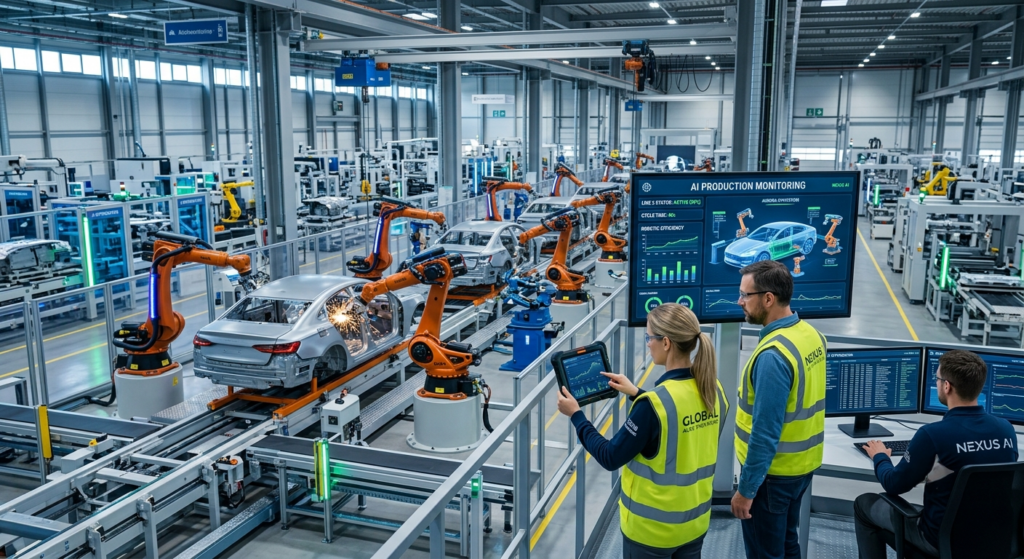
Modern robots no longer work in isolation. They communicate with machines, sensors, cloud platforms, and human workers to create highly connected production environments. These smart manufacturing systems reduce errors, shorten production times, and improve workplace safety while allowing businesses to respond more quickly to changing customer demands.
From automotive factories to electronics assembly lines and food production facilities, Robotics Manufacturing is becoming one of the driving forces behind Industry 4.0.
Why Robotics Manufacturing Matters
Manufacturers face growing challenges every year.
These include:
- rising labor costs
- global competition
- supply chain disruptions
- increasing product demand
- higher quality expectations
Robotics helps solve many of these problems by improving production speed while maintaining consistent quality.
Unlike traditional machinery, modern industrial robots can adapt to changing production requirements and operate continuously with minimal downtime. This flexibility allows companies to manufacture more products while reducing operational costs.
As industries continue adopting digital technologies, robotics is becoming a key investment for long-term growth.
1. Industrial Robots Are Becoming Smarter
Traditional factory robots were designed to repeat the same movement thousands of times. Today’s robots are far more intelligent.
Using artificial intelligence and advanced sensors, modern robots can:
- recognize objects
- detect defects
- adjust movements automatically
- learn from production data
- optimize workflows
This allows factories to manufacture different products without completely rebuilding production lines.
Instead of simply following programmed instructions, intelligent robots can react to changing conditions and improve efficiency throughout the manufacturing process.
🔗 Official Resource: International Federation of Robotics
2. Collaborative Robots Are Working Alongside Humans
One of the biggest changes in Robotics Manufacturing is the rapid growth of collaborative robots, commonly known as cobots.
Unlike traditional industrial robots that operate inside protective cages, cobots are designed to work safely next to human employees.
They assist workers by handling repetitive or physically demanding tasks such as:
- lifting heavy materials
- assembling components
- packaging products
- precision welding
- quality inspections
This partnership improves productivity while reducing workplace injuries.
Rather than replacing employees, collaborative robots often allow workers to focus on more complex and creative responsibilities.
3. Artificial Intelligence Is Improving Production
Artificial intelligence is becoming the brain behind modern manufacturing robots.
AI systems continuously analyze production data to identify opportunities for improvement.
This enables robots to:
- predict equipment failures
- reduce production waste
- improve product quality
- optimize energy consumption
- increase manufacturing speed
Instead of waiting for machines to fail, manufacturers can perform predictive maintenance before costly breakdowns occur.
This reduces downtime and keeps production lines running more efficiently.
➡ Read Also: AI-Powered Automation in Modern Industry
➡ Read Also: How Smart Factories Are Transforming Manufacturing
4. Robotics Is Improving Workplace Safety
Factory environments often involve dangerous tasks that expose workers to heat, chemicals, sharp machinery, or heavy equipment.
Modern robots are increasingly taking over these high-risk activities.
They now perform jobs including:
- hazardous material handling
- high-temperature manufacturing
- heavy lifting
- laser cutting
- chemical processing
Reducing employee exposure to dangerous environments helps lower workplace accidents while improving overall productivity.
Companies also benefit through lower insurance costs and improved employee well-being.
🔗 Official Resource: Siemens Industrial Automation
5. Robotics Is Strengthening Global Supply Chains
Recent disruptions have shown how vulnerable global supply chains can be. Manufacturers are now using robotics to improve flexibility and reduce dependence on manual processes.
Automated production systems allow factories to respond faster when demand changes or when supply shortages occur. Robots can quickly switch between production tasks, helping businesses continue operating even during challenging economic conditions.
Warehouses are also becoming more automated. Robotic systems now transport materials, organize inventory, and prepare customer orders with greater speed and accuracy than traditional manual methods.
This combination of robotics and intelligent logistics is helping manufacturers build more resilient supply chains capable of adapting to future challenges.
6. Warehouse Robotics Is Revolutionizing Logistics
Robotics is no longer limited to factory production lines. Warehouses and distribution centers are becoming highly automated as companies invest in intelligent robotic systems to improve speed, accuracy, and efficiency.
Modern warehouse robots can:
- transport inventory
- organize storage shelves
- prepare customer orders
- sort packages
- load delivery vehicles
Unlike traditional warehouse operations, robotic systems can work around the clock with consistent performance. They also reduce picking errors and shorten delivery times, helping businesses meet the growing demand for faster shipping.
Large manufacturers and retailers are increasingly combining warehouse robotics with AI-powered inventory management, creating smarter supply chains that respond quickly to customer demand.
7. Quality Control Is Becoming More Accurate
Maintaining consistent product quality is one of the biggest priorities in manufacturing. Human inspections can sometimes miss small defects, especially during high-volume production.
Modern robotic inspection systems use cameras, sensors, and artificial intelligence to examine products with incredible precision.
These systems can detect:
- surface defects
- incorrect measurements
- damaged components
- assembly errors
- packaging problems
Because inspections happen automatically throughout the production process, manufacturers can identify defects much earlier. This reduces waste, lowers production costs, and improves customer satisfaction.
As AI vision technology continues advancing, robotic quality control is becoming an essential part of Robotics Manufacturing.
Challenges Facing Robotics Manufacturing
Although robotics offers significant advantages, manufacturers still face several challenges when adopting these technologies.
High Initial Investment
Purchasing industrial robots, installing automation systems, and upgrading production facilities require substantial financial investment. Smaller manufacturers may find these costs difficult to manage.
Workforce Training
Employees need new technical skills to operate, maintain, and program robotic systems. Continuous training is becoming increasingly important as factories become more digital.
System Integration
Many factories still use older production equipment. Integrating advanced robotics with existing machinery can be technically complex and time-consuming.
Cybersecurity Risks
Connected robots exchange large amounts of production data across digital networks. Protecting these systems from cyber threats is becoming just as important as protecting traditional IT infrastructure.
Despite these challenges, the long-term benefits of automation often outweigh the initial investment.
What Comes Next
The future of Robotics Manufacturing looks increasingly intelligent.
Experts expect future factories to introduce:
- fully autonomous production lines
- AI-powered decision making
- advanced collaborative robots
- digital twin technology
- predictive maintenance
- self-optimizing manufacturing systems
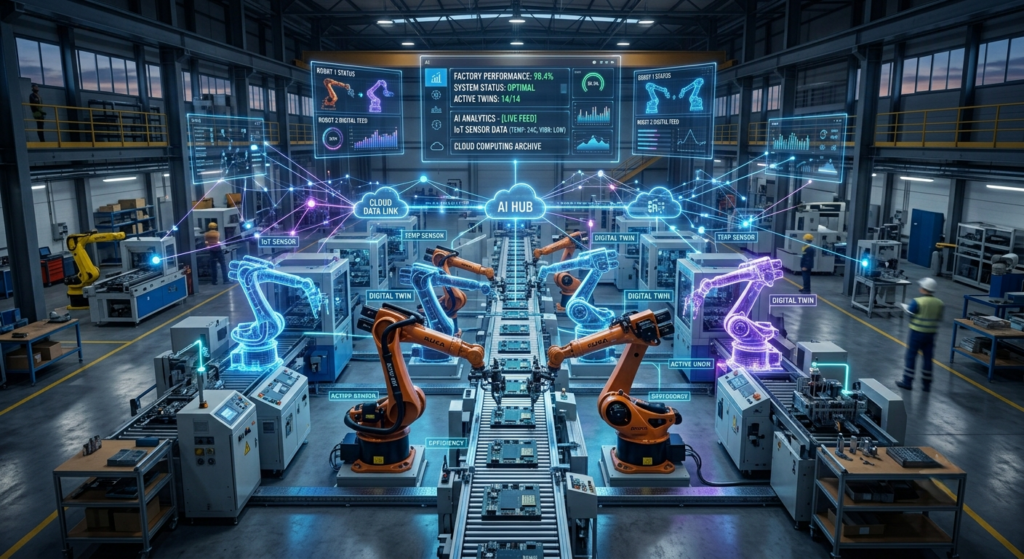
Factories will increasingly combine robotics, artificial intelligence, cloud computing, and the Industrial Internet of Things (IIoT) to create production environments capable of adapting automatically to changing demand.
These smart factories will manufacture products faster, reduce waste, improve sustainability, and deliver higher-quality products with greater consistency.
Final Outlook
Robotics Manufacturing is reshaping modern industry by making factories smarter, safer, and more efficient. From intelligent industrial robots and collaborative cobots to AI-powered quality control and automated warehouses, robotics is becoming the foundation of Industry 4.0.
While challenges such as investment costs, workforce training, and cybersecurity remain, continued advances in artificial intelligence and automation are making robotics more accessible to manufacturers of all sizes.
As technology continues evolving, the factories of tomorrow will rely on intelligent robotic systems that work alongside people, optimize production in real time, and deliver greater efficiency than ever before. Businesses that embrace robotics today will be better prepared to compete in the increasingly digital manufacturing landscape of the future.