6G Networks: 8 Revolutionary Innovations That Will Transform Global Connectivity
Mobile communication has evolved rapidly over the past few decades. From the introduction of 2G digital networks to the high-speed capabilities of 5G, each new generation has unlocked technologies that were once considered impossible. Today, researchers and technology companies are already working on the next major leap: 6G Networks.
Although large-scale deployment is still years away, 6G is expected to deliver far more than faster internet speeds. Future networks will integrate artificial intelligence, satellite communication, edge computing, and advanced sensing technologies to create a fully connected digital world.
Unlike previous generations that primarily focused on increasing bandwidth, 6G aims to support intelligent systems capable of making real-time decisions while connecting billions of devices across cities, industries, healthcare, and transportation.
In this article, we’ll explore eight revolutionary innovations that could make 6G one of the most significant technological advances of the coming decade.
Why 6G Networks Matter
Future communication systems will need to support far more than smartphones.
Emerging technologies such as:
- autonomous vehicles
- AI-powered assistants
- smart factories
- connected healthcare
- industrial robots
- augmented reality
all require ultra-fast, highly reliable, and low-latency communication.
6G Networks are being designed to meet these growing demands while creating entirely new digital experiences that are difficult to achieve with today’s infrastructure.
1. AI-Native Network Management
Artificial intelligence is expected to become a core component of future communication infrastructure.
Instead of relying on manual configuration, intelligent network management systems could:
- optimize traffic automatically
- detect failures
- predict congestion
- improve security
- allocate bandwidth dynamically
This self-optimizing approach could significantly improve network efficiency while reducing operational costs.
Rather than reacting to problems after they occur, future communication systems may identify and resolve issues before users even notice them.
🔗 Official Resource: https://www.nokia.com/bell-labs/
2. Holographic Communication
Video calls have become an essential part of daily life, but future communication may become much more immersive.
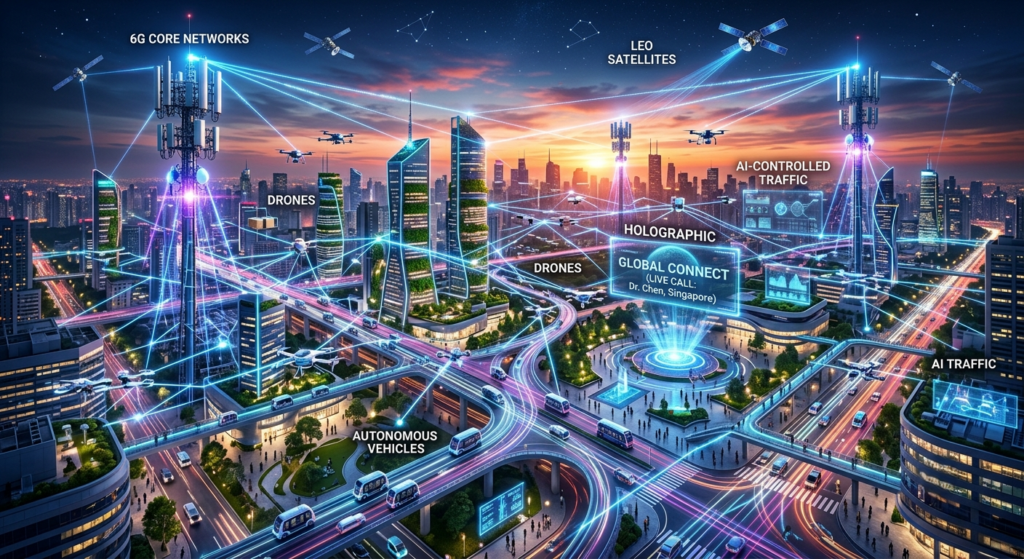
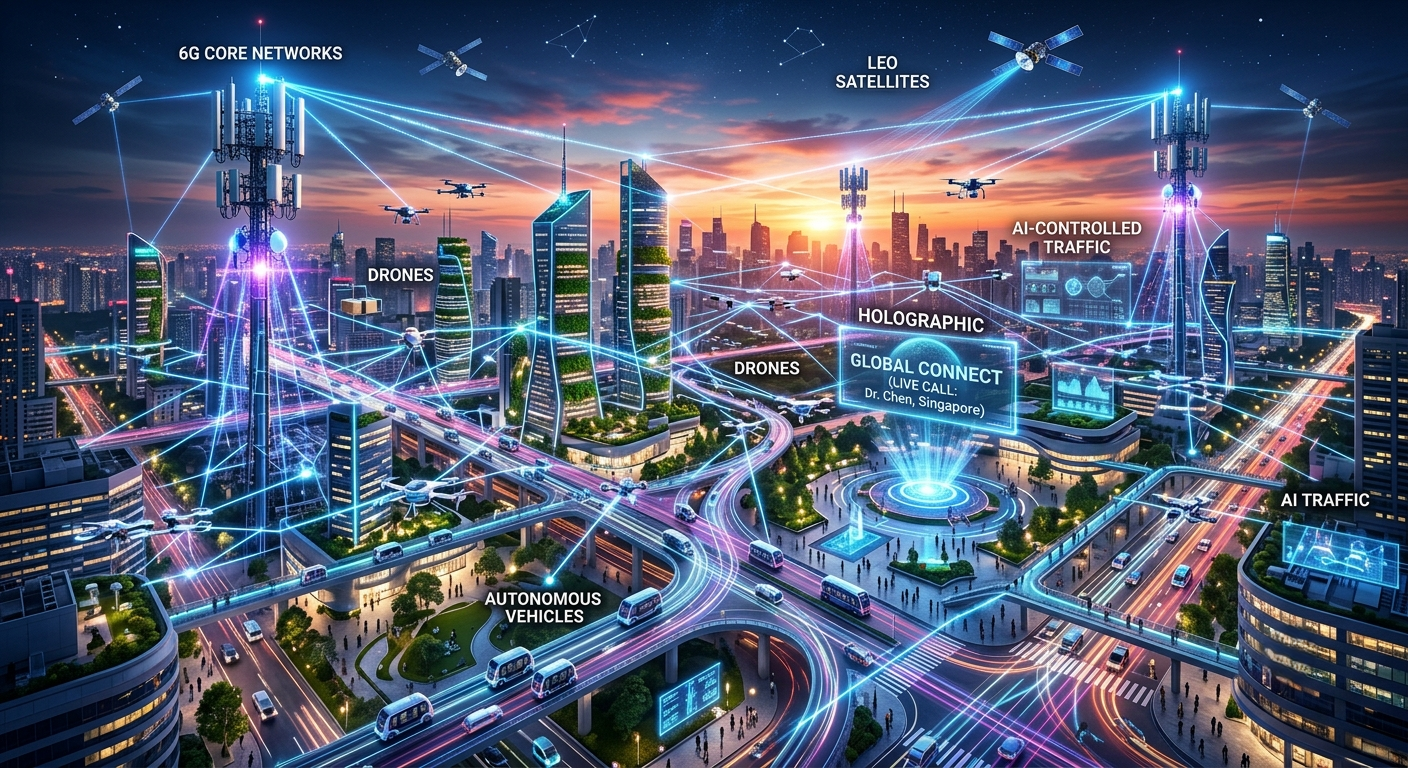
Researchers are exploring holographic communication that could project life-sized three-dimensional images of participants into a shared environment.
Potential applications include:
- remote meetings
- education
- healthcare consultations
- entertainment
- engineering collaboration
Combined with artificial intelligence and ultra-low latency, these experiences could feel almost identical to face-to-face conversations.
3. Global Satellite Integration
Future communication will likely combine terrestrial mobile towers with satellite networks to provide nearly continuous coverage.
Benefits include:
- improved rural connectivity
- maritime communication
- aviation support
- disaster recovery
- global IoT coverage
Instead of relying solely on ground-based infrastructure, future systems may automatically switch between satellites and terrestrial networks to maintain stable connections.
➡ Read Also: AI Agents: 8 Powerful Ways Artificial Intelligence Is Transforming Everyday Life
4. Smart Cities Become Smarter
One of the biggest beneficiaries of 6G Networks will be smart cities.
Future urban infrastructure could connect:
- traffic lights
- public transportation
- emergency services
- environmental sensors
- power grids
- public safety systems
Real-time communication between these systems could improve traffic flow, reduce energy consumption, and enable faster emergency responses.
As cities continue adopting digital technologies, intelligent connectivity will become increasingly important for efficient urban management.