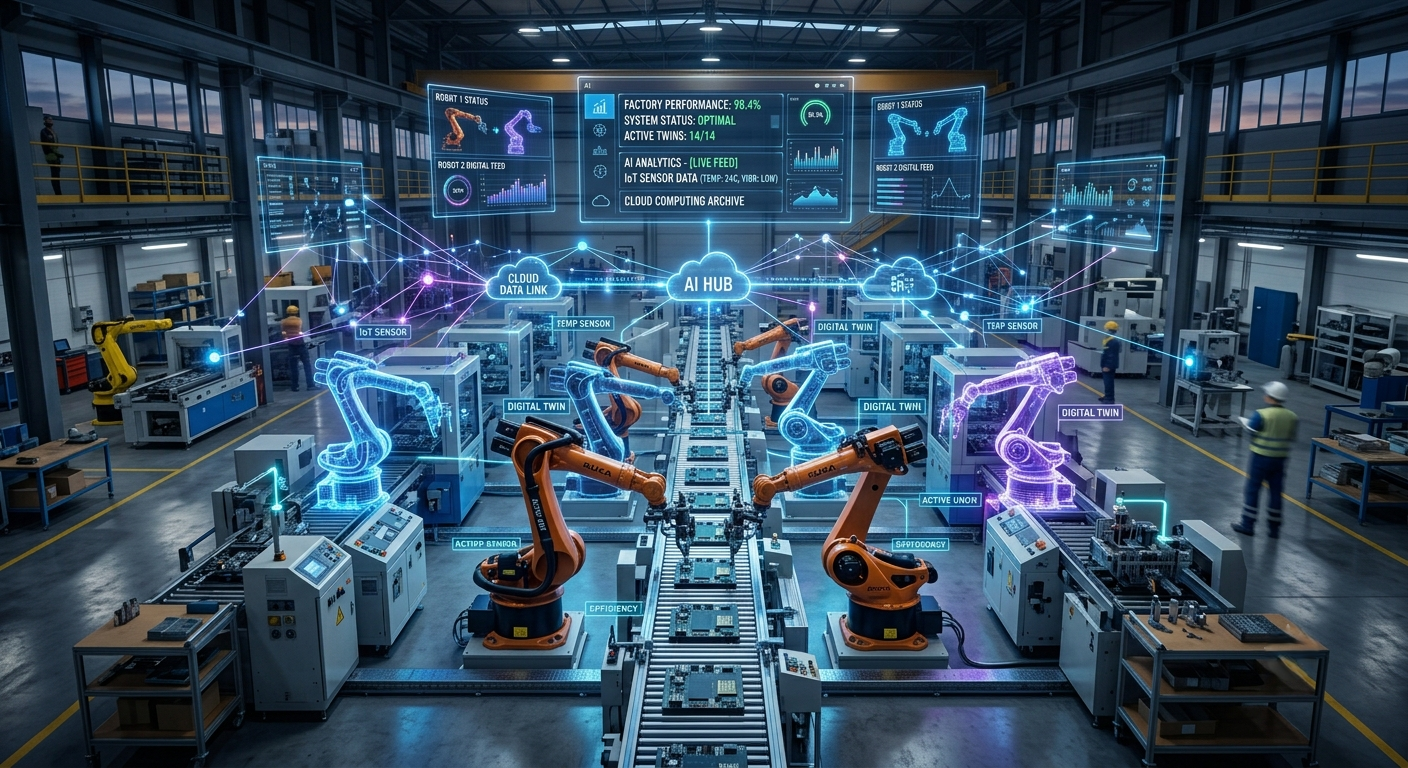
Digital Twins: 8 Amazing Innovations Transforming Modern Industry
Modern industries are becoming increasingly connected through artificial intelligence, cloud computing, and the Internet of Things (IoT). One of the most exciting technologies driving this transformation is Digital Twins. Rather than relying solely on physical testing, organizations can now create virtual replicas of machines, buildings, factories, and even entire cities.
These digital replicas continuously receive real-time information from sensors installed on physical assets. This allows engineers, operators, and decision-makers to monitor performance, predict failures, and test improvements without interrupting real-world operations.
As businesses continue investing in automation and data-driven decision-making, Digital Twins are becoming an essential tool for improving efficiency, reducing costs, and supporting innovation across multiple industries.
In this article, we’ll explore eight amazing ways this technology is transforming modern industry and why it is expected to play a major role in the future of digital transformation.
Why Digital Twins Matter
Traditional computer models often represent only a single point in time.
Digital twin technology goes much further by continuously synchronizing virtual models with their real-world counterparts.
This enables organizations to:
- monitor equipment in real time
- improve operational efficiency
- predict maintenance needs
- optimize production
- reduce operational costs
- test improvements before implementation
Instead of making decisions based solely on historical information, businesses can use live data to improve performance every day.
1. Smarter Manufacturing
Manufacturing is one of the largest adopters of Digital Twins.
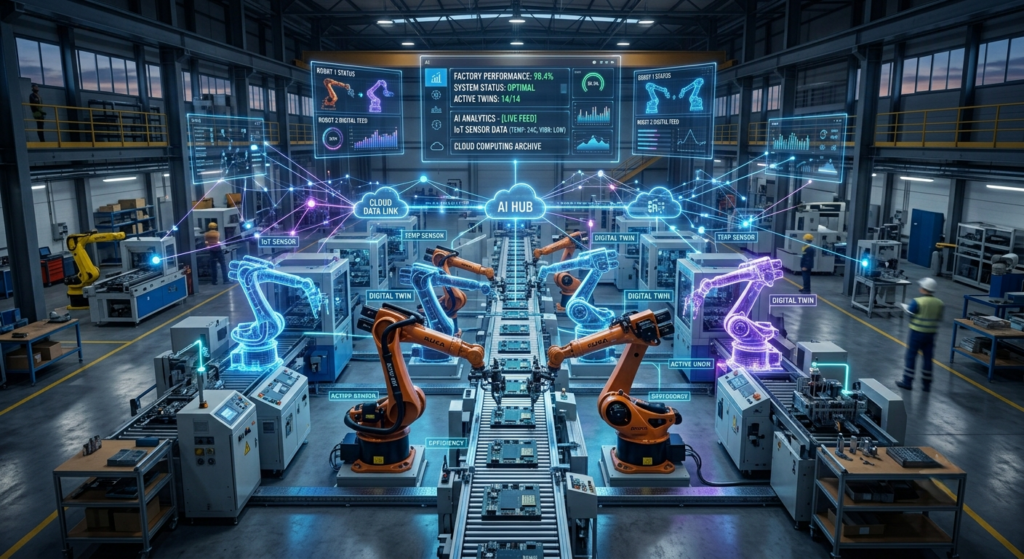
Factories can create virtual replicas of entire production lines to monitor equipment, identify bottlenecks, and improve efficiency.
Benefits include:
- production optimization
- quality control
- workflow improvements
- reduced downtime
- energy efficiency
- better resource planning
Instead of stopping production for testing, engineers can evaluate improvements inside virtual environments before applying them to real equipment.
This reduces risk while increasing productivity.
🔗 Official Resource: https://www.siemens.com
2. Predictive Maintenance
Unexpected equipment failures are expensive and often disrupt business operations.
By combining IoT sensors with virtual simulations, organizations can detect early signs of wear before machines fail.
Examples include monitoring:
- vibration
- temperature
- pressure
- energy consumption
- operating speed
- mechanical stress
Rather than following fixed maintenance schedules, companies can service equipment only when necessary, reducing costs and extending equipment lifespan.
Predictive maintenance has become one of the most valuable applications of digital twin technology.
3. Smart Cities
Cities are becoming increasingly connected through sensors and intelligent infrastructure.
Virtual city models allow planners to simulate:
- traffic flow
- public transportation
- emergency response
- energy usage
- water distribution
- environmental conditions
Instead of reacting to problems after they occur, city planners can test different solutions virtually before making real-world changes.
This helps improve public services while reducing operational expenses.
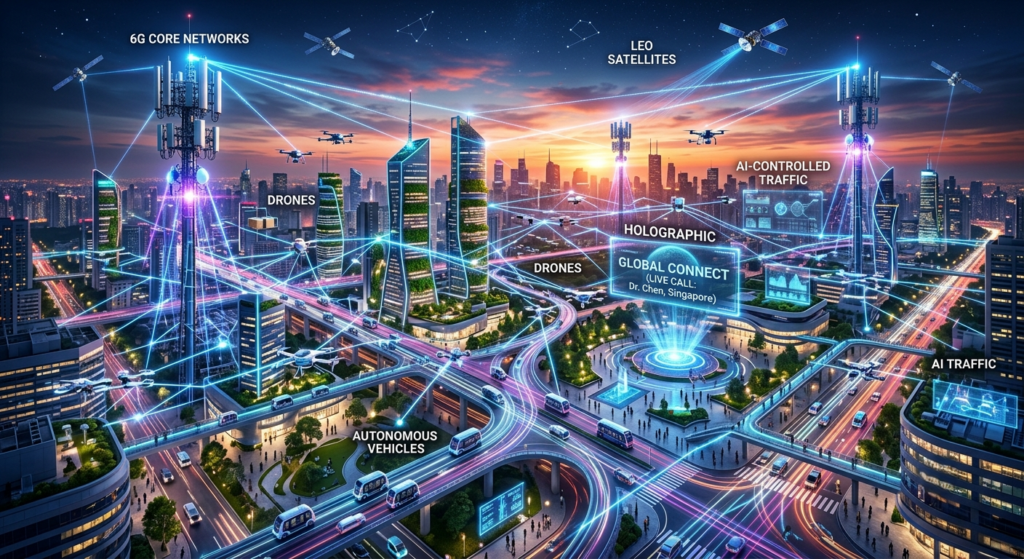
➡ Read Also: 6G Networks: 8 Revolutionary Innovations That Will Transform Global Connectivity
4. Healthcare Innovation
Healthcare organizations are beginning to use Digital Twins in exciting new ways.
Researchers are developing digital models that can simulate:
- medical devices
- hospital operations
- patient treatment plans
- surgical procedures
- healthcare workflows
- biological systems
These virtual environments allow professionals to evaluate different scenarios before making important clinical decisions.
Although still evolving, this technology has the potential to improve patient outcomes while reducing costs and increasing efficiency.