
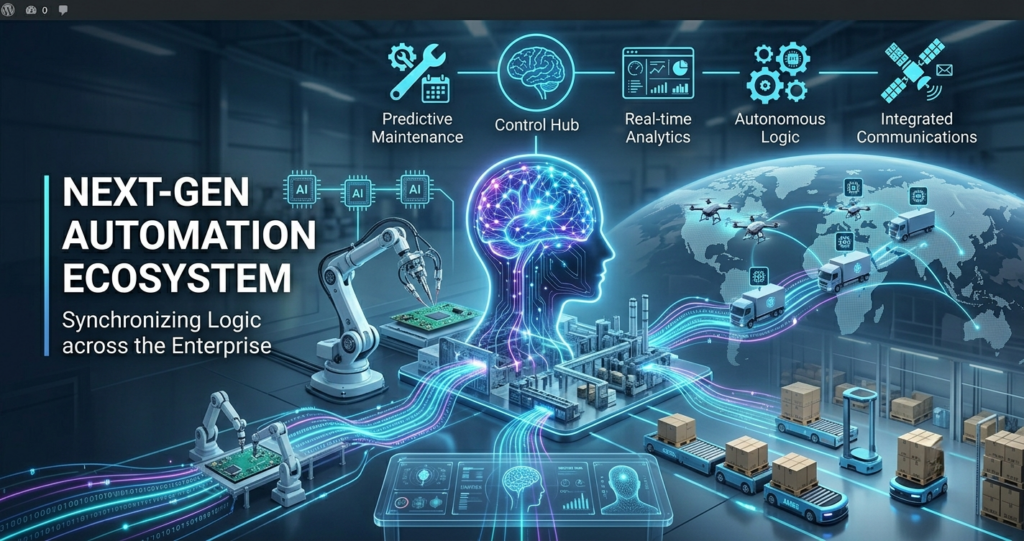
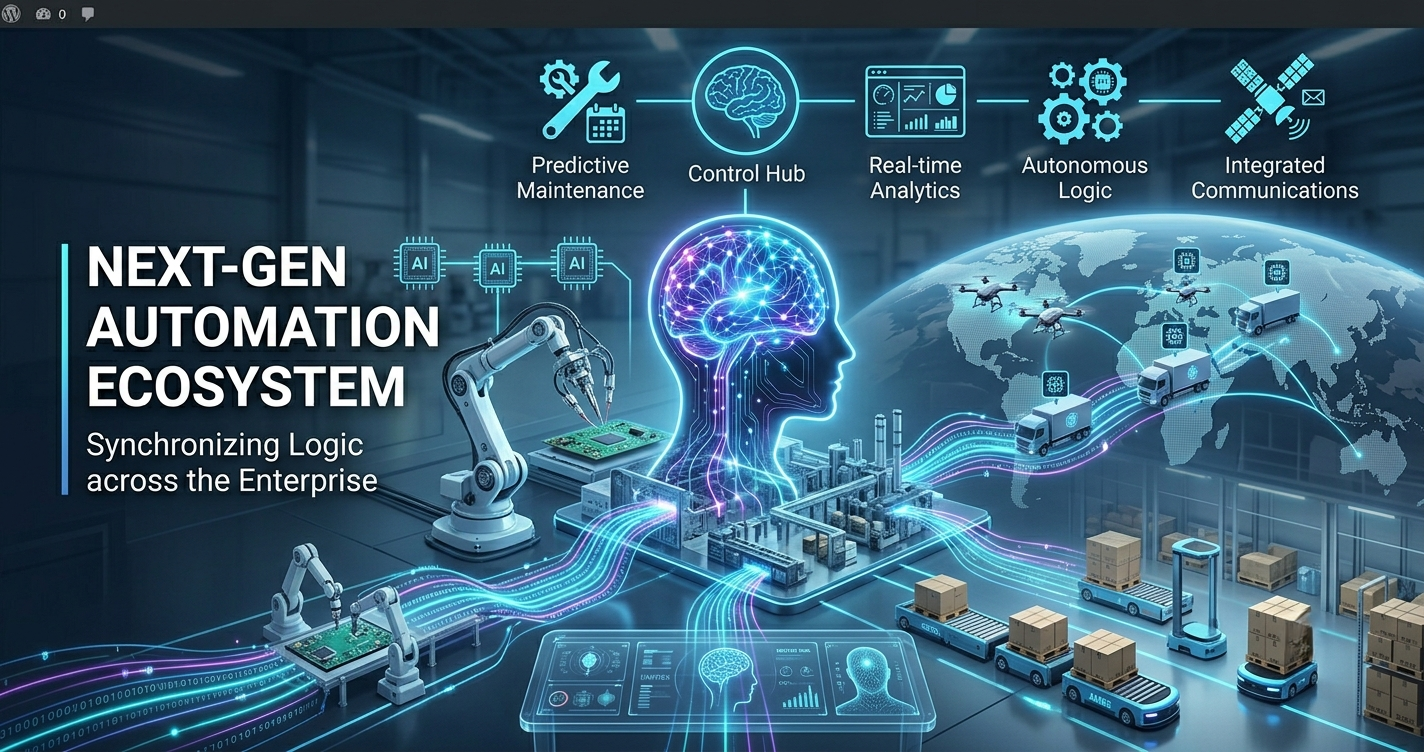
6 Ways AI-Powered Automation Is Transforming Modern Industry in 2026
AI-powered automation is becoming one of the most important drivers of industrial growth. Businesses across manufacturing, logistics, and production are using artificial intelligence to automate complex processes, reduce costs, and improve efficiency. In 2026, AI-powered automation is no longer optional — it is becoming essential for staying competitive.
From robotics to predictive maintenance, artificial intelligence is helping industries evolve faster than ever before.
What Is AI-Powered Automation?
AI-powered automation combines artificial intelligence with automated systems to perform tasks without constant human intervention. Unlike traditional automation, AI systems can learn, adapt, and improve over time.
This makes industrial processes smarter and more flexible.
Examples include:
- AI-driven robotic arms
- Automated quality inspection
- Smart inventory systems
- Predictive maintenance tools
- Autonomous logistics systems
These technologies are changing how factories and supply chains operate.
1. Smarter Production Lines
One of the biggest advantages of AI-powered automation is smarter production.
Machines can now analyze data in real time and adjust production automatically.
For example:
If a machine detects slower output, AI can optimize the process immediately.
This reduces waste and improves efficiency.
Modern smart factories already rely heavily on these systems.
2. Predictive Maintenance Reduces Downtime
Machine failures are expensive.
AI-powered automation can monitor machine performance and predict when maintenance is needed before breakdowns happen.
Benefits include:
- Less downtime
- Lower repair costs
- Longer equipment lifespan
- Better productivity
Companies using predictive systems often save millions annually.
Platforms like IBM AI Solutions are heavily investing in this area.
3. Improved Quality Control
AI systems can detect product defects faster than human inspectors.
Using cameras, sensors, and machine learning, automated quality control systems can identify:
- Shape defects
- Color inconsistencies
- Measurement errors
- Surface damage
This improves product quality and reduces customer complaints.
4. Faster Supply Chain Management
AI-powered automation is not limited to factories.
Supply chains are also becoming smarter.
AI can optimize:
- Delivery routes
- Warehouse management
- Inventory tracking
- Demand forecasting
This allows businesses to react quickly to market changes.
Companies like NVIDIA Industrial AI are supporting advanced industrial AI systems.
5. Better Energy Efficiency
Industrial operations consume huge amounts of energy.
AI-powered automation helps reduce energy usage by optimizing machine activity and production timing.
Benefits:
- Lower electricity costs
- Reduced carbon emissions
- More sustainable operations
This is becoming increasingly important as industries focus on environmental goals.
6. Human and Machine Collaboration
AI-powered automation does not eliminate human workers.
Instead, it improves collaboration.
Workers can focus on:
- Strategic planning
- Problem-solving
- Innovation
- Complex supervision
While AI handles repetitive and data-heavy tasks.
This creates a more productive work environment.
Challenges of AI-Powered Automation
Despite its advantages, AI-powered automation still has challenges.
High Setup Costs
Advanced AI systems require large investments.
Cybersecurity Risks
Connected industrial systems can become targets for cyberattacks.
Strong security practices are essential.
Skill Gaps
Workers need training to understand and manage AI systems.
This transition can take time.
The Future of AI-Powered Automation
The future looks highly advanced.
Experts expect:
- More autonomous robots
- Fully AI-managed factories
- Smarter supply chains
- Better human-machine interaction
As industries continue adopting digital transformation, AI-powered automation will become a standard part of industrial operations.
Final Thoughts
AI-powered automation is changing modern industry by making production smarter, faster, and more efficient. Companies investing in artificial intelligence today are preparing for a future where automation drives growth and innovation.
The industries that adapt early will have the biggest competitive advantage in the years ahead.
IBM AI Solutions
NVIDIA Industrial AI
7 Ways Smart Factories Are Transforming Industrial Robotics in 2026
https://techworld20.com/ai-customer-support/