
Humanoid Robots: 8 Revolutionary Innovations Transforming the Future of Work
For decades, robots have transformed factories by welding vehicles, moving components, and performing repetitive tasks. Most industrial machines, however, were designed for a single purpose and often needed specially designed workspaces. That model is beginning to change as Humanoid Robots become more capable, intelligent, and practical.
Instead of building an entirely new environment around a machine, engineers are developing robots shaped roughly like humans so they can work in spaces already designed for people. Stairs, shelves, tools, factory equipment, doorways, and workstations can potentially be used without completely rebuilding the workplace.
Artificial intelligence is accelerating this transition. Modern systems combine computer vision, advanced sensors, machine learning, autonomous navigation, and increasingly capable robotic hands. Tesla is developing Optimus as a general-purpose bipedal robot intended for unsafe, repetitive, or boring tasks, while Boston Dynamics is commercializing its electric Atlas platform for industrial material-handling applications.
The result could become one of the biggest shifts in automation since the industrial robot arrived.
Why Humanoid Robots Matter
Traditional industrial robots are extremely efficient when performing predictable tasks repeatedly. Their limitation is flexibility.
A human-shaped robot could potentially move between different jobs using many of the same tools and environments already used by employees.
Possible advantages include:
- greater production flexibility
- reduced exposure to dangerous work
- automated material handling
- assistance during labor shortages
- continuous operation
- easier deployment in human-designed environments
The real breakthrough will not come simply from making robots walk like humans. It will come from giving them enough intelligence, dexterity, reliability, and autonomy to perform useful work without constant human control.
1. Artificial Intelligence Is Becoming the Robot’s Brain
The most important development in modern robotics may be artificial intelligence.
Older robots generally followed carefully programmed movements. Newer systems can increasingly use cameras, touch sensors, and AI models to understand their surroundings and adapt their behavior.
Figure’s Helix 02 system, for example, connects vision, touch, and proprioception to full-body control. The company demonstrated the system completing multi-step household tasks involving walking, manipulation, balance, and object handling without constant human intervention.
AI-powered robotics can improve:
- object recognition
- navigation
- task planning
- hand coordination
- environmental awareness
- learning from demonstrations
This ability to adapt is essential if robots are expected to operate outside tightly controlled factory environments.
🔗 Official Resource: Figure AI
2. Human-Like Mobility Is Improving Rapidly
Walking reliably may sound simple, but it is one of the hardest challenges in robotics.
A useful humanoid machine must balance while carrying objects, navigating uneven surfaces, turning, bending, and recovering from unexpected movement.
Boston Dynamics has taken this concept further with the commercial electric Atlas. The company says Atlas is designed for industrial environments and can autonomously navigate to a charging station and replace its own battery before returning to work. Its current product platform is also designed around material handling and integration with enterprise systems.
Unitree is pursuing another approach with increasingly agile humanoids. Its H1 platform uses LiDAR and depth cameras for environmental perception, while the company reported in 2026 that an H1 robot exceeded 10 meters per second in a running demonstration.
Mobility matters because a machine that can move through human environments can potentially perform far more varied tasks than a stationary robot.
3. Manufacturing Is Becoming the First Major Battlefield
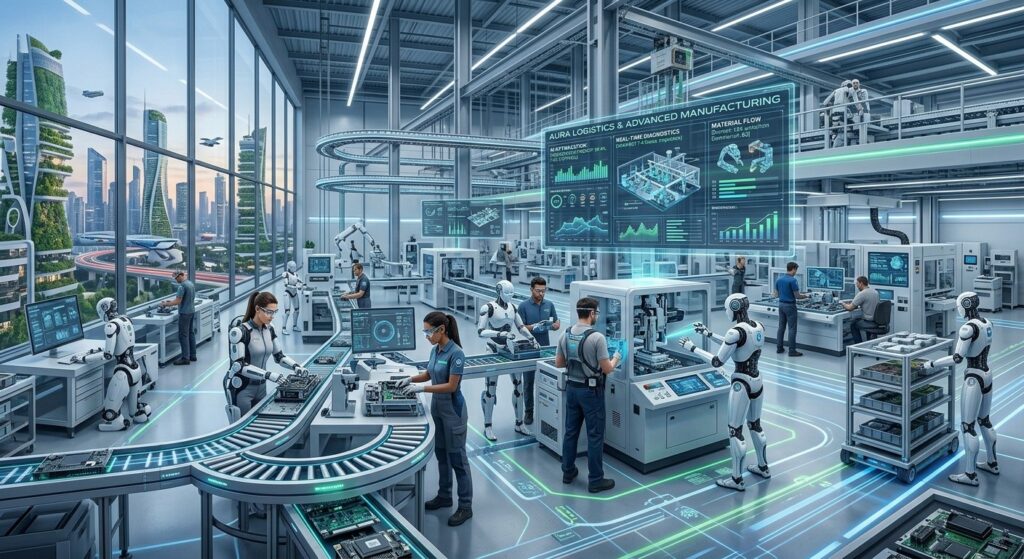
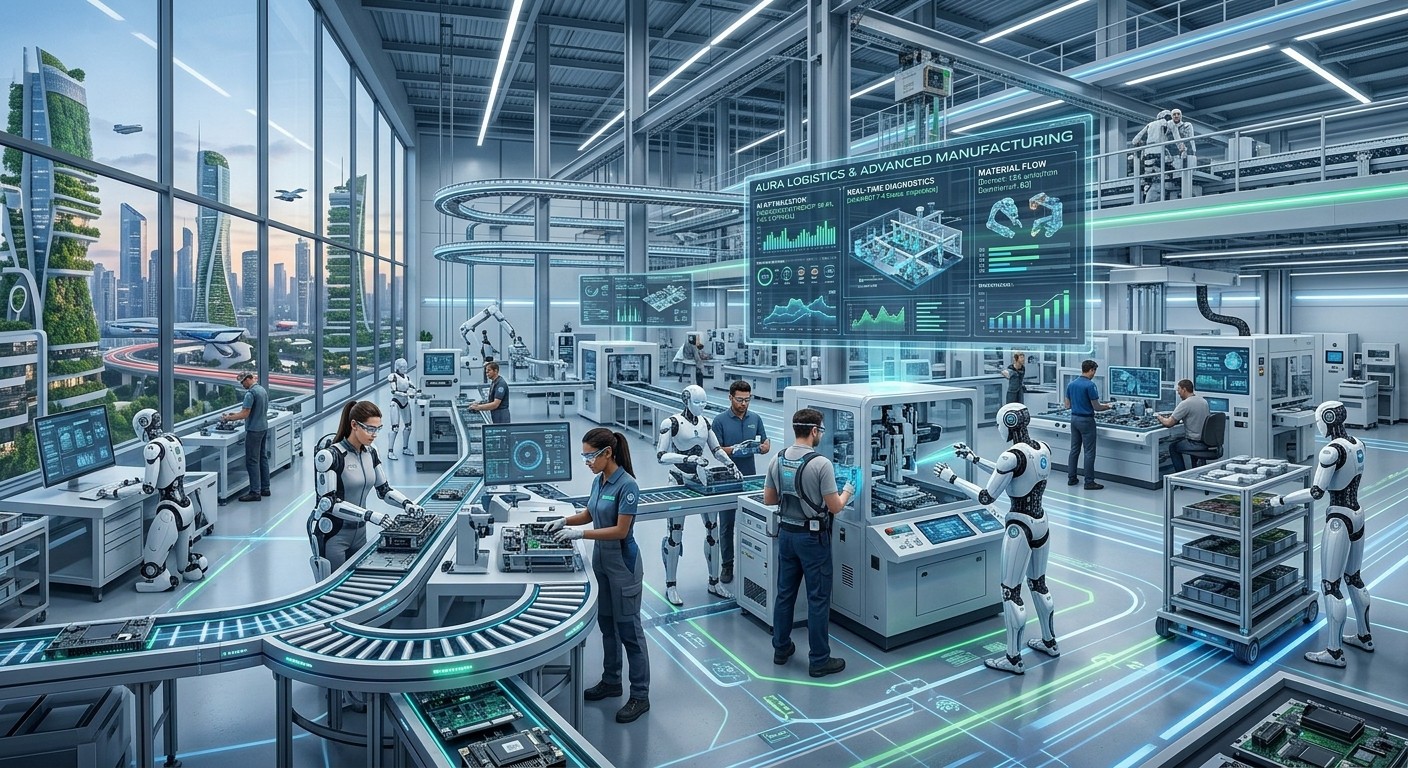
Factories are likely to be among the earliest large-scale deployment environments for Humanoid Robots.
Manufacturing offers several advantages for early adoption:
- predictable workflows
- structured environments
- repetitive tasks
- measurable productivity
- strong demand for automation
Boston Dynamics has scheduled Atlas deployments with Hyundai and Google DeepMind, while Figure has already tested humanoid systems in automotive manufacturing environments. Boston Dynamics says its new Atlas product version is aimed initially at applications such as part sequencing, machine tending, and order building.
This doesn’t necessarily mean replacing entire workforces. Early robots are more likely to handle physically demanding, repetitive, or ergonomically difficult jobs while employees focus on supervision, troubleshooting, quality, and higher-level tasks.
➡ Read Also: The Growth of Robotics in Manufacturing
4. Robotic Hands Are Becoming More Capable
Walking is only half the challenge.
For a humanoid machine to become genuinely useful, it needs hands capable of interacting with tools and objects designed for humans.
Modern systems are increasingly focusing on:
- force sensing
- precision gripping
- object manipulation
- variable grip strength
- tactile feedback
- coordinated two-handed tasks
Unitree’s G1 platform, for example, offers versions with dexterous hand systems and combines force and position control for object manipulation. The company currently lists the G1 starting at $13,500, illustrating how smaller humanoid platforms are beginning to move beyond laboratory-only pricing.
Improved manipulation could eventually allow machines to perform jobs ranging from assembly and warehouse picking to equipment maintenance.
➡ Read Also: Digital Twins: 8 Amazing Innovations Transforming Modern Industry
5. Humanoid Robots Are Moving Toward Scalable Production
A major challenge in robotics is moving from an impressive prototype to thousands of reliable machines.
Figure reported in April 2026 that its BotQ manufacturing facility had produced more than 350 Figure 03 robots and increased output from roughly one robot per day to one per hour. The company described this scale as important not only for manufacturing but also for generating more real-world data for autonomous learning.
This transition matters because the economics of robotics change dramatically when production scales.
Higher manufacturing volumes can potentially lead to:
- lower component costs
- faster hardware improvements
- larger training datasets
- more standardized maintenance
- broader commercial deployment
If humanoid platforms follow a cost curve similar to other technologies, their availability could expand rapidly once manufacturing reaches sufficient scale.
🔗 Official Resource: Boston Dynamics Atlas
6. Warehouses and Logistics Could Become Major Markets
Warehouses are another natural environment for Humanoid Robots because workers perform thousands of repetitive physical tasks every day.
Future humanoid systems could assist with:
- moving containers
- picking products
- loading and unloading
- organizing inventory
- preparing orders
- transporting materials
- scanning packages
- machine tending
Unlike fixed warehouse automation, a general-purpose robot could potentially perform several different tasks during the same shift.
This flexibility is particularly valuable for businesses where products, workflows, and demand constantly change.
The long-term goal is not simply to create faster machines. Companies want robots that can understand instructions, navigate existing facilities, and switch between tasks without requiring an entirely redesigned warehouse.
7. Humans and Robots Could Work Side by Side
One of the most important developments will be human-robot collaboration.
Future workplaces may combine human judgment and creativity with the physical capabilities and consistency of robots.
Humans could focus on:
- decision-making
- customer interaction
- complex troubleshooting
- creativity
- supervision
- quality control
Robots could handle:
- repetitive lifting
- dangerous environments
- monotonous production tasks
- material transportation
- physically demanding operations
Safety will therefore become extremely important.
Commercial systems are already being designed around this requirement. Boston Dynamics says Atlas includes human detection and fenceless guarding capabilities, while its enterprise platform is intended to allow robots to operate within human-scale industrial environments.
8. Humanoid Robots Could Eventually Enter Our Homes
Factories may be the first major destination, but the much larger ambition is general-purpose robotics.
Imagine asking a robot to:
- load a dishwasher
- organize a room
- carry groceries
- clean household areas
- move heavy objects
- assist elderly people
- perform basic household chores
This remains considerably more difficult than factory automation because homes are unpredictable environments.
However, progress is already visible. Figure is developing its Figure 03 platform for both workplace and household tasks, while Tesla continues developing Optimus as a general-purpose autonomous bipedal robot.
If general-purpose household robotics becomes reliable and affordable, the potential market could eventually extend far beyond factories.
Humanoid Robot Comparison
The current market is difficult to compare because these machines are at very different stages of commercialization. Some have published prices, while others are primarily enterprise platforms or development programs.
Figure officially lists Figure 03 at 5 ft 8 in, 61 kg, a 20 kg payload, and about five hours of runtime.
Boston Dynamics lists Atlas at 1.9 meters and 90 kg, with up to four hours of normal operation and a sustained carrying capacity of 30 kg.
Unitree’s G1 is considerably smaller at approximately 1.32 meters and 35 kg. It has around two hours of battery life and a starting price of $13,500 before taxes and shipping.
Price Comparison
Humanoid robot pricing is still unusual because most advanced systems are not sold like consumer electronics.
Unitree currently represents one of the clearest examples of falling entry prices. However, it would be misleading to compare the G1 directly with Atlas or Figure 03 as though all of these machines target the same market. Their capabilities, deployment goals, and commercial maturity differ significantly.
Why Humanoid Robots Are Becoming More Affordable
Several technologies used in robotics are improving simultaneously.
These include:
- AI processors
- electric motors
- batteries
- cameras
- LiDAR
- force sensors
- manufacturing techniques
- machine-learning software
Mass production could push costs down further.
As manufacturers produce more units, they can potentially lower component costs, standardize maintenance, improve supply chains, and gather larger amounts of real-world training data.
Lower hardware prices could also expand robotics research, education, experimentation, and software development.
Major Challenges Still Facing Humanoid Robots
Despite impressive demonstrations, several obstacles remain.
Reliability
A factory robot may need to perform thousands of movements every day without failure.
An impressive short demonstration is very different from operating reliably for months.
Battery Life
Walking, balancing, computing, sensing, and manipulating objects consume substantial energy.
Current platforms still operate for only a limited number of hours before requiring recharging or battery replacement.
Dexterity
Human hands are extraordinarily complex.
Robots still struggle with objects that are fragile, flexible, unusually shaped, or positioned unpredictably.
Artificial Intelligence
A useful general-purpose robot must understand more than individual commands.
It needs to recognize objects, understand context, plan several actions ahead, detect mistakes, and recover when something unexpected happens.
Safety
A powerful machine working near humans must operate extremely reliably.
Robots will require sophisticated collision avoidance, force control, emergency systems, cybersecurity, and continuous environmental awareness.
Cost
Hardware prices are falling, but deployment also involves software, integration, maintenance, training, charging infrastructure, and support.
Will Humanoid Robots Replace Human Workers?
This is one of the biggest questions surrounding the technology.
The answer is unlikely to be simply yes or no.
Automation has historically eliminated some tasks while creating others. Humanoid robotics could produce a similar transition.
Jobs involving repetitive physical activities may experience significant automation, particularly in:
- manufacturing
- logistics
- warehouses
- material handling
- inspection
- hazardous environments
At the same time, new roles could grow around:
- robot maintenance
- fleet management
- AI training
- robotics engineering
- safety supervision
- system integration
- human-robot workflow design
The larger transformation may therefore concern tasks rather than entire occupations.
A worker could increasingly supervise machines that perform the most repetitive physical portions of a job while concentrating on decisions and tasks requiring human judgment.
The Future of Humanoid Robots
The next decade could determine whether Humanoid Robots become a major computing platform or remain concentrated in specialized industrial applications.
Several developments will be particularly important:
- more capable robotics foundation models
- improved dexterous hands
- longer-lasting batteries
- cheaper actuators
- better computer vision
- safer human-robot interaction
- mass manufacturing
- autonomous learning
- improved reliability
Competition between Tesla, Figure, Boston Dynamics, Unitree, and other robotics companies could accelerate development dramatically.
🔗 Official Resource: Boston Dynamics Atlas
🔗 Official Resource: Unitree G1
Final Thoughts
Humanoid Robots are moving from science-fiction concepts toward practical machines capable of performing real-world tasks.
Artificial intelligence is giving robots better perception and decision-making, while improvements in batteries, motors, sensors, manufacturing, and robotic hands are making the hardware increasingly capable.
The biggest opportunity may come from flexibility. Instead of designing a specialized machine for every individual task, companies are attempting to create robots that can learn different jobs while operating in environments originally designed for humans.
Manufacturing and logistics are likely to remain important early markets, but the long-term ambition is much larger. If developers can achieve sufficient reliability, safety, intelligence, and affordability, humanoid machines could eventually appear in businesses, healthcare environments, public services, and homes.
The technology is still young, and many demonstrations remain far ahead of everyday deployment. Nevertheless, the rapid progress from laboratory prototypes to commercially targeted machines suggests that humanoid robotics will be one of the most important technology sectors to watch over the coming decade.
Disclaimer: This article is for informational and educational purposes only. Humanoid robotics is developing rapidly, and specifications, pricing, availability, capabilities, and deployment timelines may change.