
7 Ways Smart Factories Are Transforming Industrial Robotics in 2026
Smart factories are becoming the foundation of modern manufacturing. With industrial robotics, artificial intelligence, and real-time data systems, businesses are producing faster, safer, and more efficiently than ever before. In 2026, smart factories are expected to play an even bigger role in global industry.
The combination of automation and robotics is helping manufacturers reduce costs, improve quality, and adapt quickly to market demands. As technology evolves, smart factories are changing the way industries operate.
What Are Smart Factories?
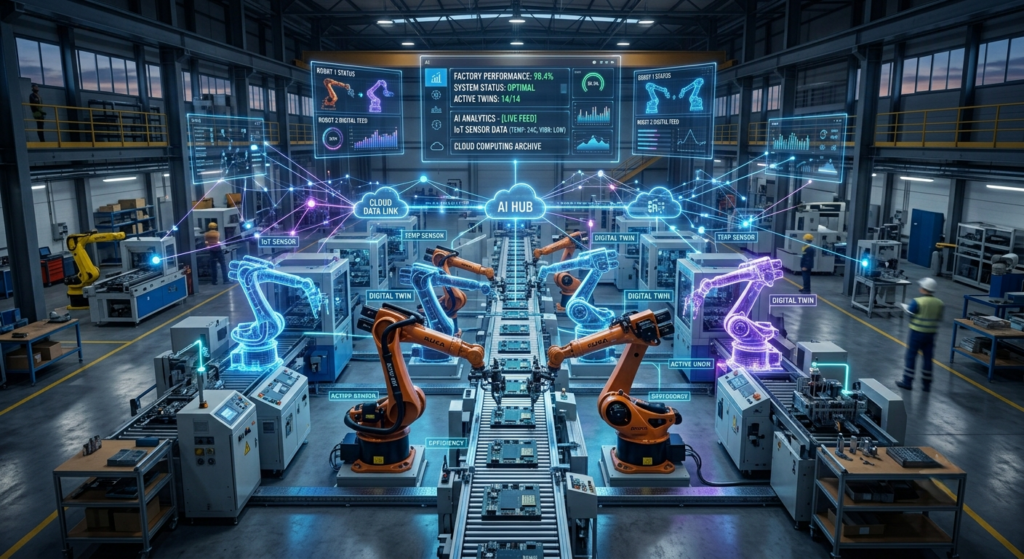
Smart factories are advanced manufacturing environments where machines, robots, and systems are connected through digital technology. They use sensors, AI, and cloud systems to monitor and optimize production.
Unlike traditional factories, smart factories can make decisions automatically based on real-time data.
Key technologies include:
- Industrial robotics
- Internet of Things (IoT)
- Artificial intelligence
- Cloud computing
- Predictive maintenance
These technologies work together to improve efficiency.
1. Faster Production Speeds
One of the biggest advantages of smart factories is speed.
Industrial robots can work continuously without breaks, increasing production rates significantly.
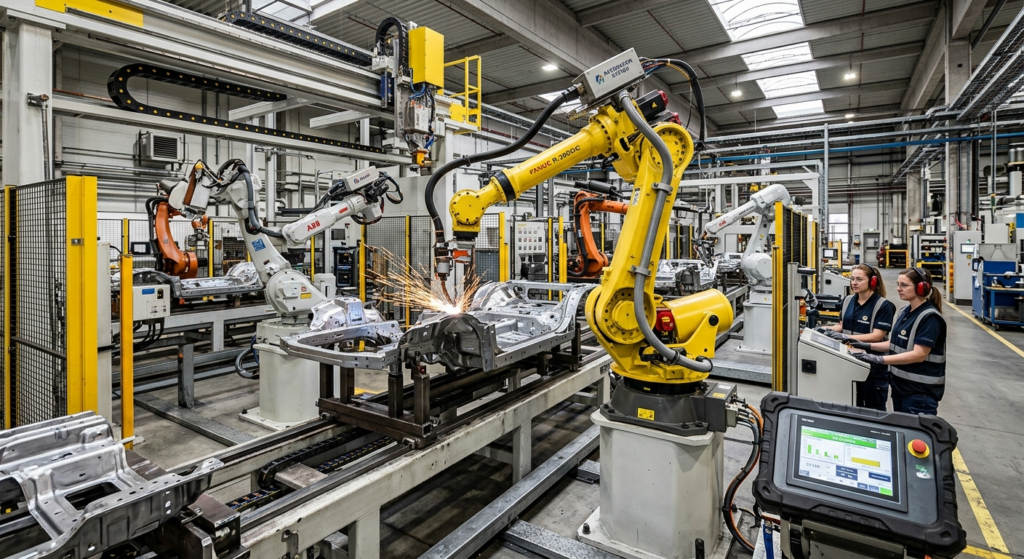
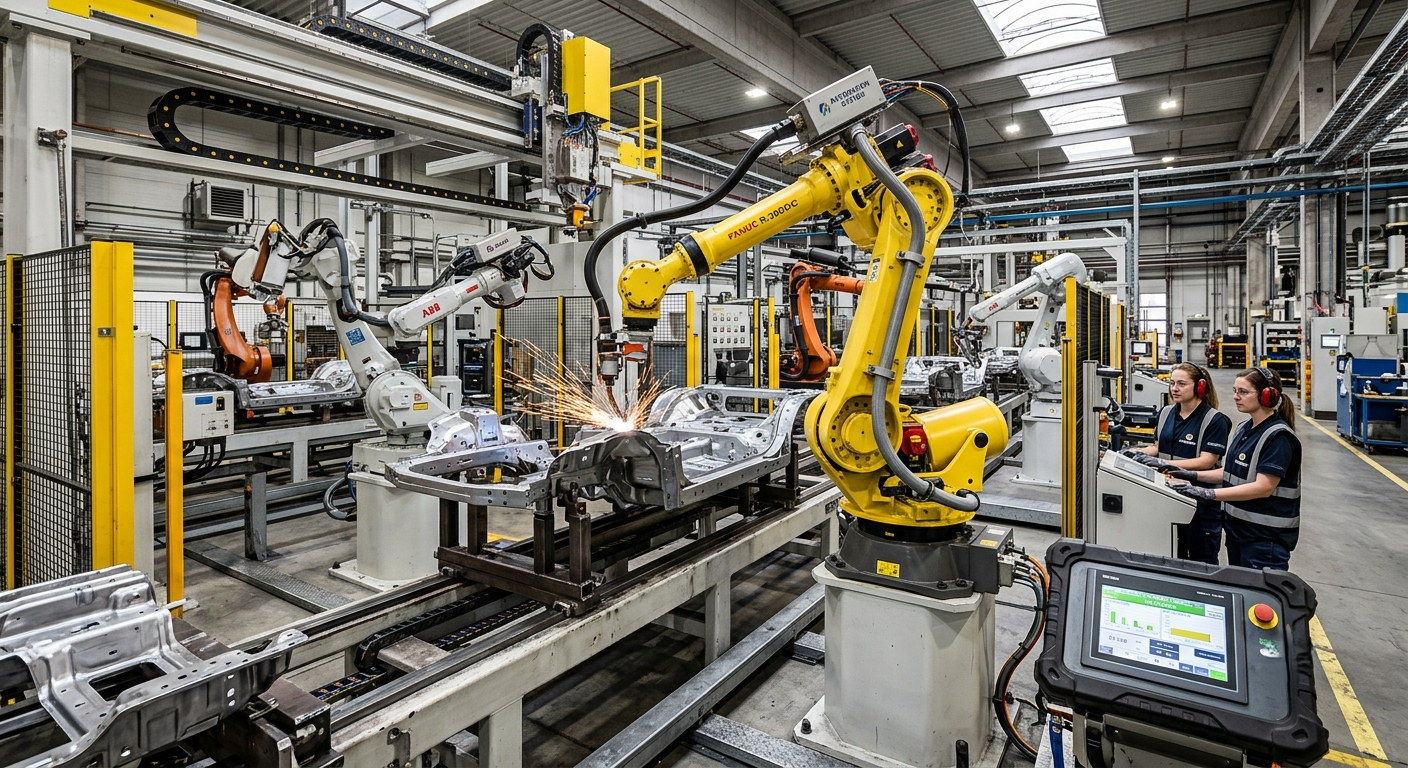
For example, automotive factories use robotic arms to assemble vehicles much faster than manual labor.
This allows businesses to meet higher customer demand.
2. Improved Product Quality
Smart factories use sensors and machine vision systems to detect errors instantly.
This reduces defective products and improves consistency.
Industrial robotics can repeat tasks with high precision, making manufacturing more accurate than human-only processes.
Companies like ABB Robotics are leading innovations in this area.
3. Lower Operational Costs
Automation reduces labor-intensive tasks, lowering long-term costs.
Although smart factories require high initial investment, businesses often save money through:
- Reduced waste
- Lower maintenance costs
- Fewer human errors
- Better energy efficiency
Over time, these savings can be significant.
4. Better Workplace Safety
Industrial robotics can handle dangerous tasks such as:
- Heavy lifting
- Welding
- Chemical handling
- High-temperature operations
This reduces workplace accidents and protects employees.
Instead of replacing workers, smart factories often move employees into safer and more technical roles.
5. Predictive Maintenance
Smart factories can predict machine failures before they happen.
Sensors collect performance data and AI analyzes patterns to identify possible problems.
This helps businesses:
- Prevent unexpected breakdowns
- Reduce downtime
- Improve equipment lifespan
Predictive maintenance is one of the most valuable features of smart manufacturing.
6. Real-Time Decision Making
Factories connected to cloud systems can monitor production instantly.
Platforms from Siemens Industrial Automation allow managers to track performance, machine health, and energy usage in real time.
This allows faster decisions and better production planning.
Similar AI-driven systems are also transforming customer-facing industries, as seen in AI customer support solutions.
7. Sustainability and Energy Efficiency
Modern smart factories focus heavily on sustainability.
Automation helps optimize energy usage and reduce waste.
Benefits include:
- Lower carbon emissions
- Reduced material waste
- Better recycling systems
- Efficient power consumption
This is becoming important as industries move toward greener production methods.
Challenges of Smart Factories
Despite their advantages, smart factories also face challenges.
High Initial Costs
Setting up industrial robotics and automation systems can be expensive.
Cybersecurity Risks
Connected systems create more opportunities for cyberattacks.
Manufacturers must invest in strong security measures.
Workforce Training
Employees need new technical skills to work with smart systems.
Training becomes essential.
The Future of Smart Factories
The future of smart factories looks promising.
Experts predict more advanced AI, autonomous robotics, and fully connected supply chains.
Future trends may include:
- Self-repairing machines
- AI-driven production planning
- Advanced human-robot collaboration
- Fully automated logistics systems
As industries continue evolving, smart factories will become even more important.
Final Thoughts
Smart factories are transforming industrial robotics by making manufacturing faster, safer, and more efficient. In 2026, businesses that invest in smart automation will have a strong competitive advantage.
The rise of industrial robotics is not just a trend — it is shaping the future of global manufacturing.
ABB Robotics
Siemens Industrial Automation
Also Read The Role of AI in Customer Support
.
How Data Centers Are Becoming Sustainable explores a key technology trend shaping the digital future.