8 Powerful 3D Printing in Manufacturing Trends Transforming Industry in 2026
3D printing in manufacturing has become one of the most important innovations in industrial production. What once started as a simple prototyping tool is now changing how companies design, test, and produce products.
In 2026, additive manufacturing is helping businesses improve speed, reduce waste, and create more complex products than traditional methods.
Why 3D Printing in Manufacturing Matters
Manufacturers are under constant pressure to produce faster, cheaper, and more efficiently.
3D printing helps solve these challenges by offering:
- Faster prototyping
- Lower material waste
- Flexible design options
- Reduced production costs
- Faster product development
This makes additive manufacturing a major industry trend.
1. Faster Product Prototyping
One of the biggest advantages of 3D printing in manufacturing is speed.
Companies can now create prototypes within hours instead of weeks.
This allows:
- Faster product testing
- Quicker design changes
- Faster market entry
Speed has become one of the strongest competitive advantages.
2. Lower Production Costs
Traditional manufacturing often requires expensive molds and tools.
3D printing reduces these setup costs significantly.
This is especially valuable for:
- Small production runs
- Custom parts
- Product testing
Lower costs allow businesses to innovate faster.
3. More Complex Product Designs
Traditional production methods often have design limitations.
Additive manufacturing allows more complex shapes that would be difficult or impossible using older methods.
This improves:
- Product performance
- Weight reduction
- Design flexibility
Industries like aerospace heavily depend on this advantage.
4. Less Material Waste
Sustainability is becoming a major focus.
Traditional manufacturing often cuts material away, creating waste.
3D printing builds products layer by layer, using only the needed material.
This reduces waste and improves efficiency.
Sustainable production is becoming increasingly important.
5. Better Customization
Customization is one of the strongest benefits.
Manufacturers can create unique products for:
- Medical implants
- Automotive parts
- Consumer products
- Industrial tools
This flexibility improves product personalization.
6. Smart Factories Are Using More Additive Manufacturing
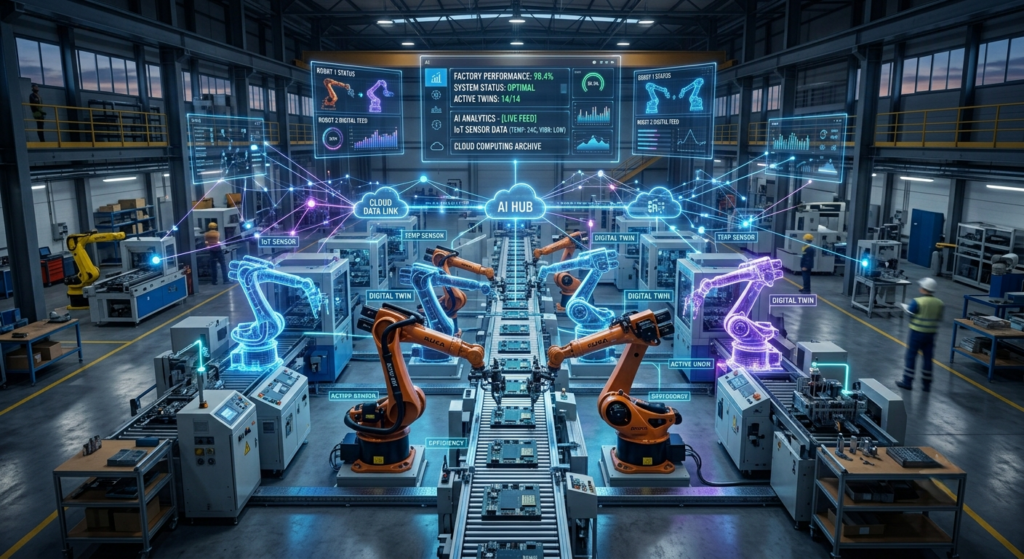
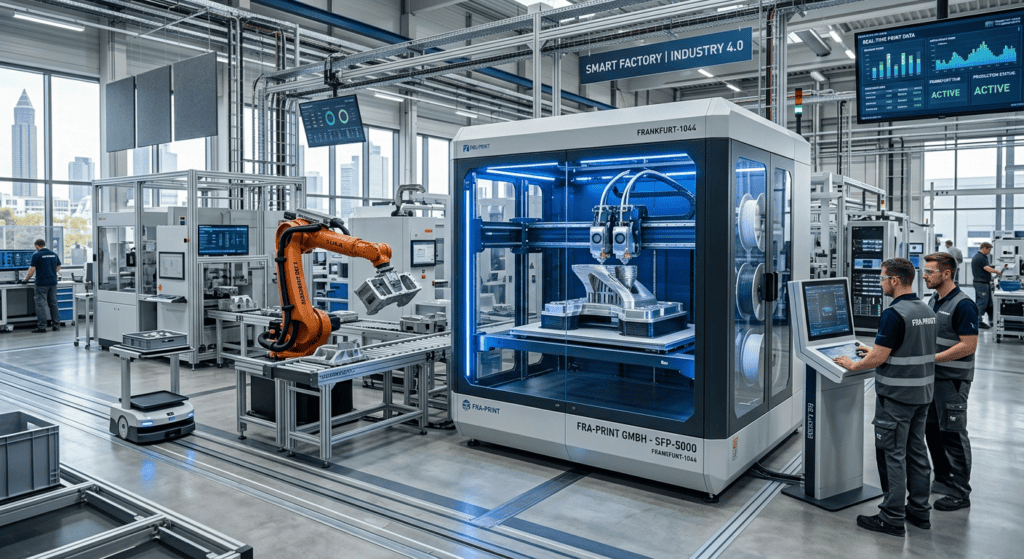
Smart factories are increasingly integrating industrial printing systems into automated workflows.
Combined with robotics and automation, this improves:
- Speed
- Accuracy
- Efficiency
Read more: 7 Powerful Smart Factories Trends Transforming Industrial Robotics in 2026
This connection is helping transform industrial production.
7. AI Is Improving Print Accuracy
Artificial intelligence is now improving print quality.
AI-powered systems can monitor:
- Material usage
- Layer precision
- Structural quality
- Machine performance
This improves overall efficiency and reduces defects.
Read more: 6 Powerful AI-Powered Automation Trends Transforming Modern Industry in 2026
AI integration continues growing.
8. Supply Chains Are Becoming More Flexible
Supply chain disruptions have shown the value of local production.
3D printing allows companies to produce parts closer to where they are needed.
Benefits include:
- Faster delivery
- Lower shipping costs
- Reduced inventory needs
This improves supply chain resilience.
Industries Leading 3D Printing Growth
Several industries are driving adoption.
These include:
- Aerospace
- Healthcare
- Automotive
- Construction
- Consumer electronics
Companies like Stratasys Official continue leading industrial innovation.
Design software platforms like Autodesk 3D Printing also support advanced manufacturing workflows.
Challenges of 3D Printing in Manufacturing
Despite the advantages, challenges remain.
High Equipment Costs
Industrial-grade printers remain expensive.
Material Limitations
Not all materials are suitable for additive production.
Speed for Large Production
Mass production can still be slower than traditional methods.
These limitations continue improving.
The Future of 3D Printing in Manufacturing
The future looks highly promising.
Experts expect:
- Faster industrial printers
- Better materials
- Lower production costs
- More AI integration
- Larger industrial adoption
As technology improves, additive manufacturing will become even more important.
Final Thoughts
3D printing in manufacturing is transforming how products are built, tested, and delivered. In 2026, this technology is helping businesses reduce waste, improve speed, and create more advanced products.
The future of manufacturing will be heavily shaped by additive production and industrial innovation.
7 Powerful Smart Factories Trends Transforming Industrial Robotics in 2026
6 Powerful AI-Powered Automation Trends Transforming Modern Industry in 2026