Climate Innovation: 7 Powerful Technologies Driving Hope
Climate change remains one of the biggest global challenges, but technology is giving governments, businesses, and communities new reasons for optimism. Climate Innovation is no longer limited to experimental research—it is becoming a practical solution that is reshaping energy production, transportation, agriculture, and urban development.
In 2026, advances in renewable energy, artificial intelligence, robotics, and sustainable infrastructure are helping reduce emissions while improving efficiency. Around the world, companies are investing billions in cleaner technologies that not only protect the environment but also create new industries and jobs.
Although climate challenges remain significant, innovation is proving that economic growth and environmental responsibility can work together. The future depends on developing smarter technologies that reduce waste, improve resource management, and accelerate the transition toward a low-carbon economy.
Why Climate Innovation Matters
The effects of climate change are becoming increasingly visible through rising temperatures, extreme weather events, and growing pressure on natural resources.
Governments and businesses are responding by investing in technologies that can:
- reduce greenhouse gas emissions
- improve energy efficiency
- protect natural resources
- increase sustainability
- support cleaner transportation
- create environmentally friendly industries
Instead of focusing only on reducing damage, Climate Innovation aims to develop practical solutions that make everyday life more sustainable while supporting long-term economic development.
Technology is becoming one of humanity’s strongest tools in addressing environmental challenges.
1. Renewable Energy Is Replacing Fossil Fuels
Renewable energy has become one of the biggest success stories in climate innovation. Solar panels, wind farms, hydroelectric power, and geothermal energy are providing cleaner alternatives to coal, oil, and natural gas.
Modern renewable systems are becoming more efficient and affordable every year. Improved battery storage also allows electricity generated during sunny or windy periods to be stored for later use, making renewable energy more reliable than ever before.
Many countries are expanding renewable energy projects to reduce dependence on fossil fuels while improving long-term energy security.
The transition toward cleaner electricity is helping lower carbon emissions and supporting global climate goals.
🔗 Official Resource: International Renewable Energy Agency (IRENA)
2. Artificial Intelligence Is Optimizing Energy Systems
Artificial intelligence is helping energy providers operate more efficiently by analyzing enormous amounts of data in real time.
AI can optimize:
- electricity distribution
- renewable energy production
- battery storage
- energy forecasting
- power grid management
By predicting demand and balancing supply more accurately, AI reduces unnecessary energy waste while improving the stability of modern electrical grids.
These intelligent systems also help integrate renewable energy sources into national power networks, ensuring that clean electricity is used more effectively.
As AI technology continues advancing, it will become an even more important part of future climate solutions.
➡ Read Also: Green Technology Reshaping Modern Data Centers
➡ Read Also: Electric Vehicles: 7 Powerful Infrastructure Changes Driving the Future
3. Smart Cities Are Becoming More Sustainable
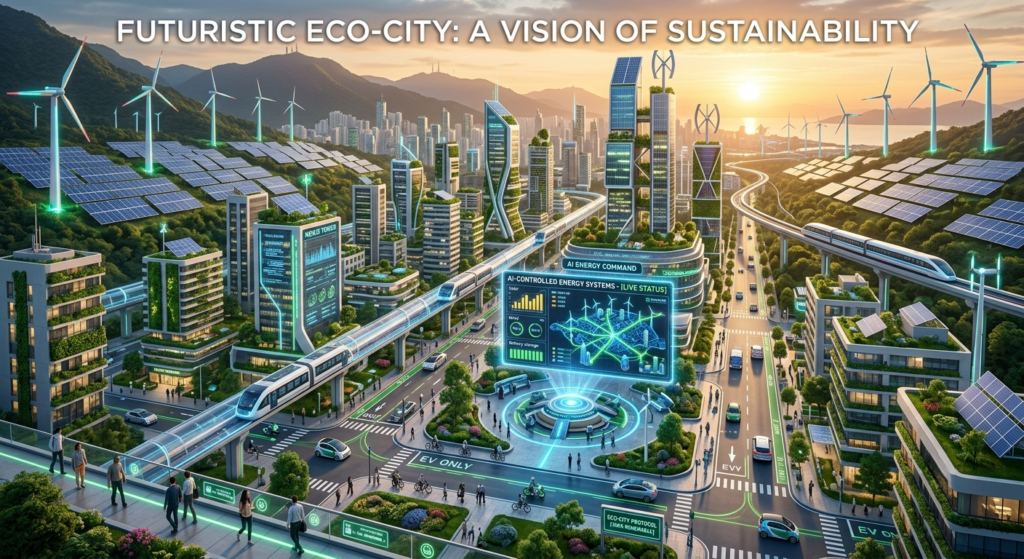
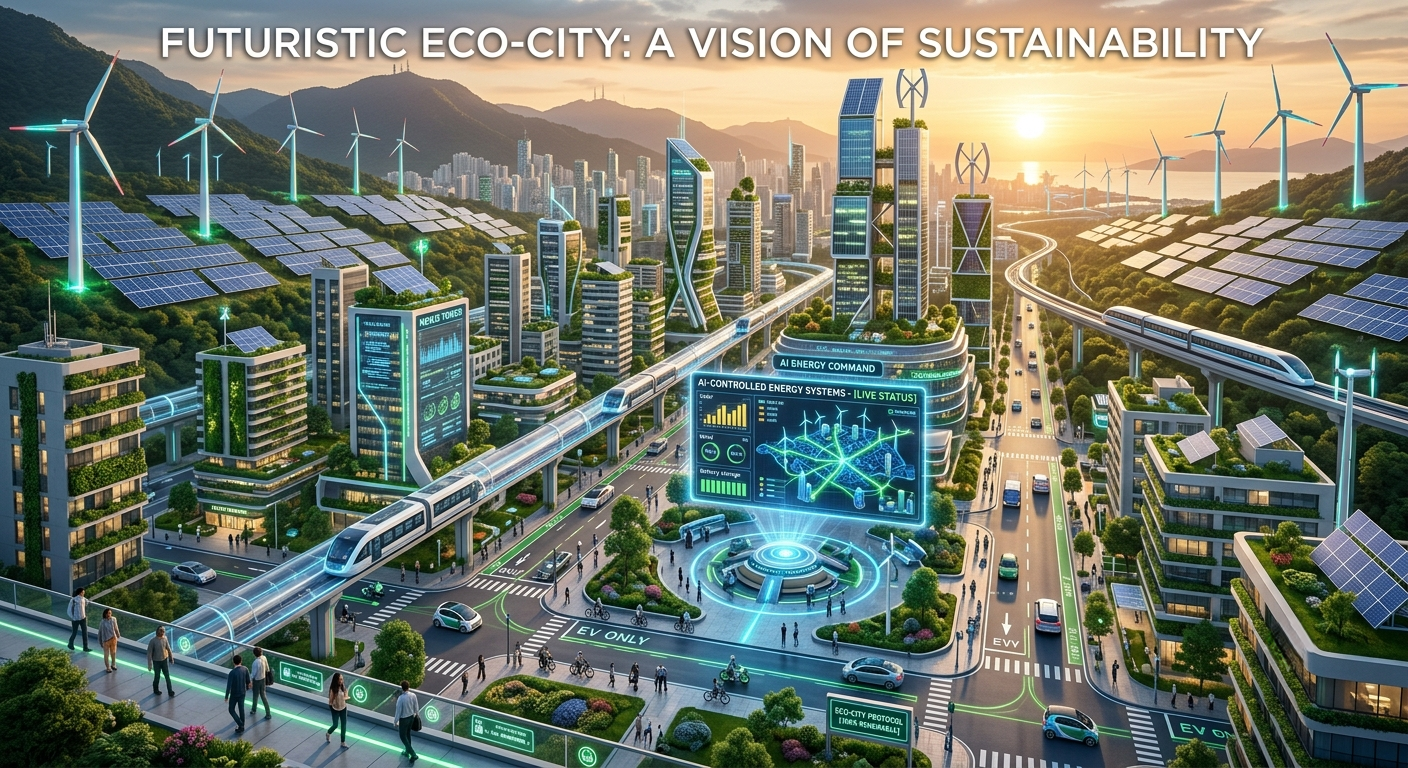
Cities are responsible for a large share of global energy consumption and carbon emissions. As urban populations continue growing, creating smarter and more sustainable cities has become a major priority.
Modern smart cities use connected technologies to improve how resources are managed.
Examples include:
- intelligent traffic systems
- energy-efficient buildings
- smart street lighting
- digital waste management
- water conservation systems
- connected public transportation
These technologies help reduce congestion, lower pollution, and improve the quality of life for residents.
Many new construction projects also focus on environmentally friendly materials, better insulation, and renewable energy integration, making buildings significantly more energy efficient than older structures.
🔗 Official Resource: UN-Habitat
4. Cleaner Transportation Is Accelerating
Transportation remains one of the largest contributors to global carbon emissions, but rapid technological innovation is changing how people and goods move around the world.
Electric vehicles are becoming more affordable, while charging infrastructure continues expanding across cities and highways. Public transportation systems are also adopting electric buses, hydrogen-powered trains, and cleaner logistics solutions.
At the same time, aviation and shipping industries are investing in sustainable fuels, lighter materials, and more efficient engines to reduce emissions.
Although the transition will take time, cleaner transportation technologies are already helping countries move toward a lower-carbon future.