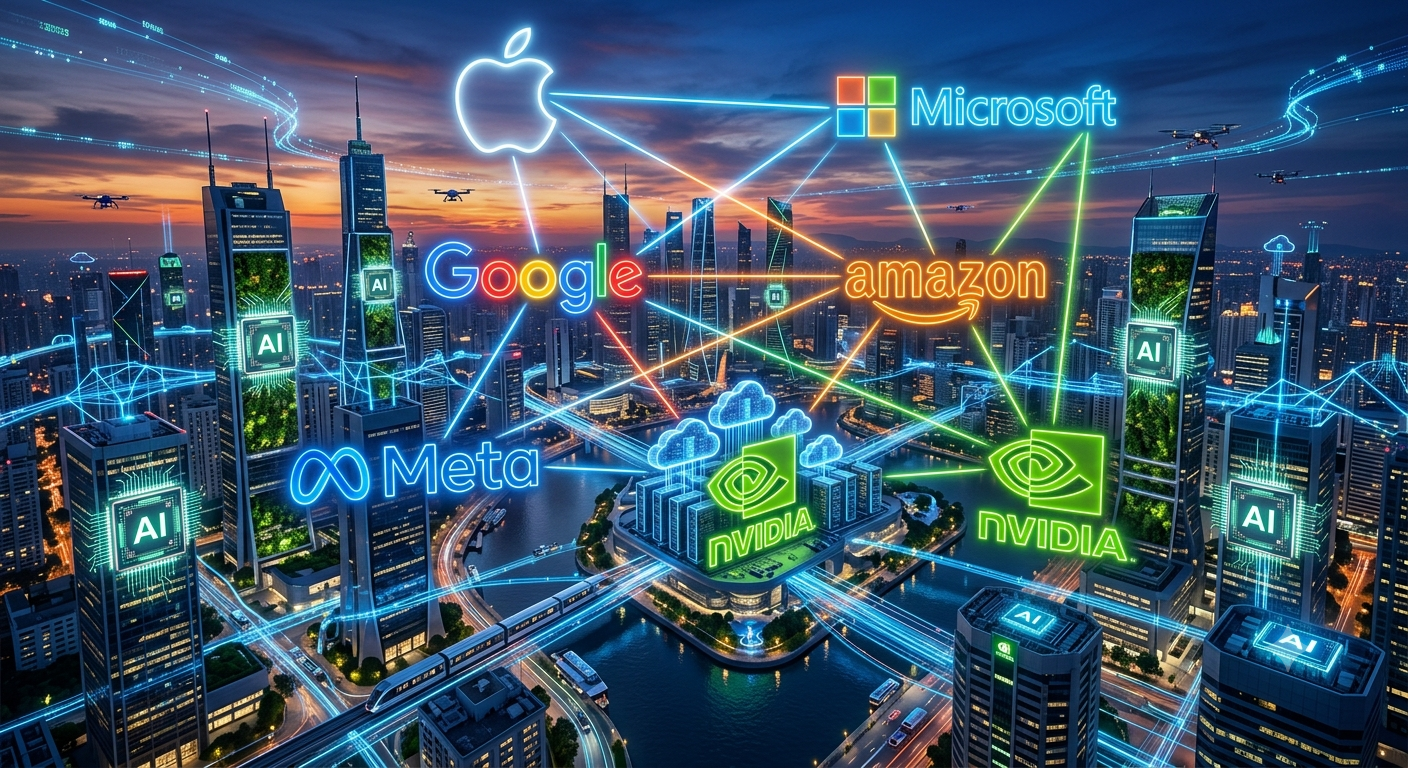
Big Tech Battle: 7 Fierce Rivalries Shaping the Future
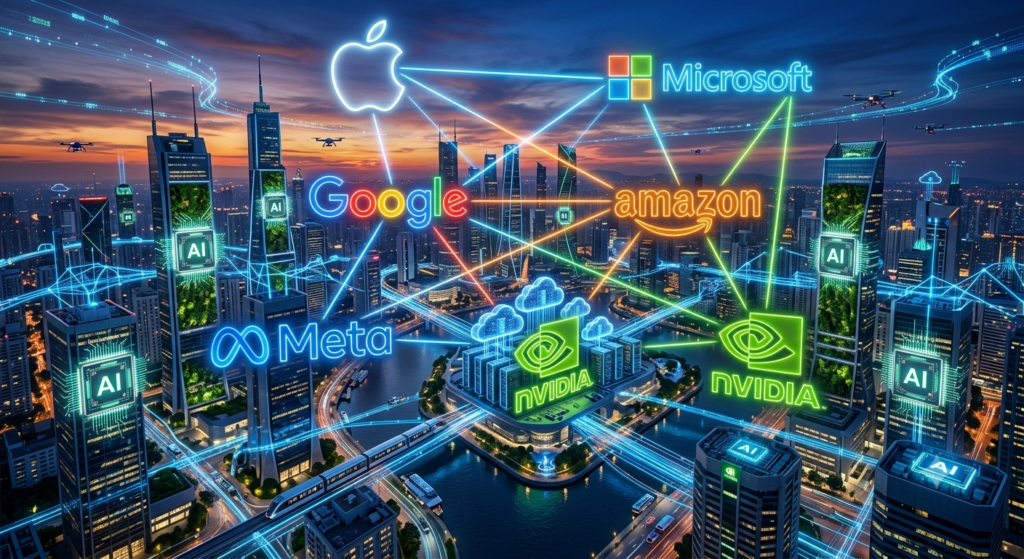
The Big Tech Battle has become one of the defining business stories of the decade. Companies such as Apple, Microsoft, Google, Amazon, Meta, and NVIDIA are no longer competing in just one market. Instead, they are fighting across artificial intelligence, cloud computing, semiconductors, consumer devices, digital advertising, and enterprise software.
What makes this competition unique is that every major breakthrough influences millions of people around the world. Whether it’s a smarter AI assistant, a faster processor, a more secure cloud platform, or the next generation of wearable technology, these companies are investing billions of dollars to stay ahead of one another.
The outcome of this rivalry will influence not only the technology industry but also education, healthcare, entertainment, transportation, and global business. Understanding the Big Tech Battle helps explain why innovation is accelerating so quickly in 2026.
Why the Big Tech Battle Matters
Technology companies now shape almost every aspect of modern life.
Their products and services power:
- smartphones
- laptops
- cloud services
- online shopping
- artificial intelligence
- business software
- social media
- digital payments
As these companies expand into new industries, competition becomes more intense.
Every major product launch has the potential to influence global markets, consumer behavior, and even government policies.
Because of this, the battle between technology giants is no longer only about profits—it is about shaping the future of the digital world.
1. Artificial Intelligence Has Become the Main Battlefield
Artificial intelligence is currently the largest area of competition among major technology companies.
Microsoft has invested heavily in AI-powered productivity tools and cloud services.
Google continues integrating AI into search, Android, Workspace, and its developer platforms.
Meta is building advanced AI models for social media, business tools, and virtual experiences.
Apple is introducing more on-device AI features designed to improve privacy while delivering smarter user experiences.
Meanwhile, NVIDIA has become one of the most important companies in the AI ecosystem by producing graphics processors that power modern AI systems.
The company that develops the most capable and widely adopted AI technologies could influence the next generation of computing.
🔗 Official Resource: Microsoft AI
2. Cloud Computing Continues to Expand
Cloud services have become one of the most profitable technology markets.
The biggest providers continue investing billions of dollars into expanding their global infrastructure.
Leading platforms compete by offering:
- faster cloud performance
- stronger cybersecurity
- AI integration
- developer tools
- business applications
This competition helps businesses deploy software more efficiently while reducing infrastructure costs.
Cloud computing has also become the foundation for artificial intelligence, making this rivalry even more important.
Organizations of every size now depend on reliable cloud platforms to manage data, applications, and digital operations.
➡ Read Also: Cloud Computing Trends Transforming Business
➡ Read Also: The Race for Faster Quantum Processors
3. Semiconductors Are Powering the Next Generation
Modern technology depends on advanced semiconductor chips.
Without them, artificial intelligence, smartphones, autonomous vehicles, gaming consoles, and cloud data centers simply would not function.
Demand for powerful chips has increased dramatically as AI applications become more complex.
Companies are investing in processors that offer:
- higher performance
- lower energy consumption
- faster AI processing
- better graphics
- improved security
NVIDIA currently dominates AI accelerator hardware, while Apple continues developing its own custom silicon. Other technology companies are also designing specialized processors to reduce dependence on external suppliers and improve performance across their ecosystems.
🔗 Official Resource: NVIDIA AI
4. Smartphones Remain a Strategic Market
Despite rapid advances in AI and cloud computing, smartphones continue to generate enormous revenue and influence consumer technology trends.
Apple and Google remain major competitors by continuously improving hardware, operating systems, cameras, security features, and AI capabilities.
Modern smartphones now function as digital wallets, health monitors, AI assistants, entertainment devices, and productivity tools.
The next generation of mobile technology is expected to integrate even deeper artificial intelligence, satellite connectivity, and more powerful on-device processing.
As consumers demand longer battery life, improved privacy, and smarter software, smartphone innovation remains a critical part of the Big Tech Battle.