Table of Contents
ToggleAugmented Reality: 7 Amazing Ways Transforming Education
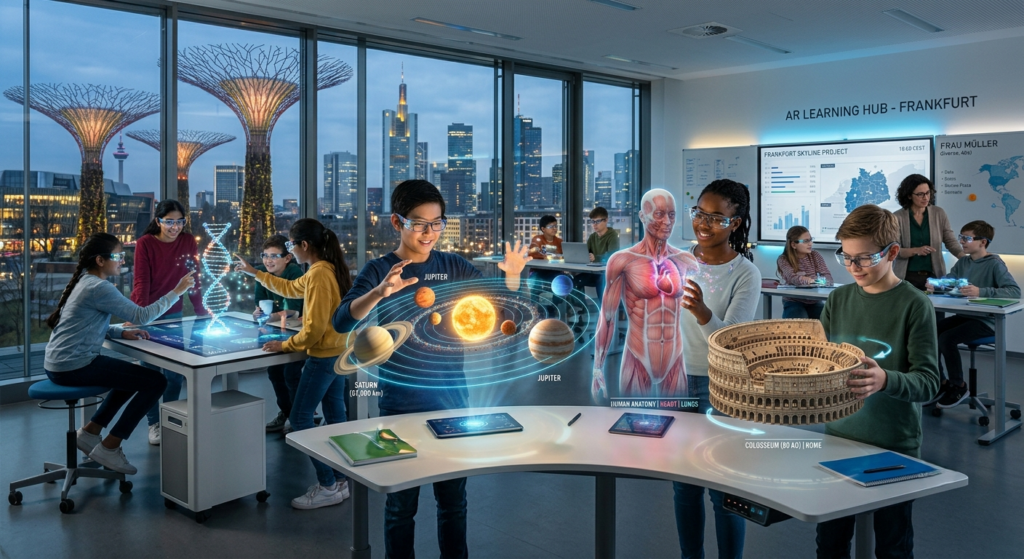
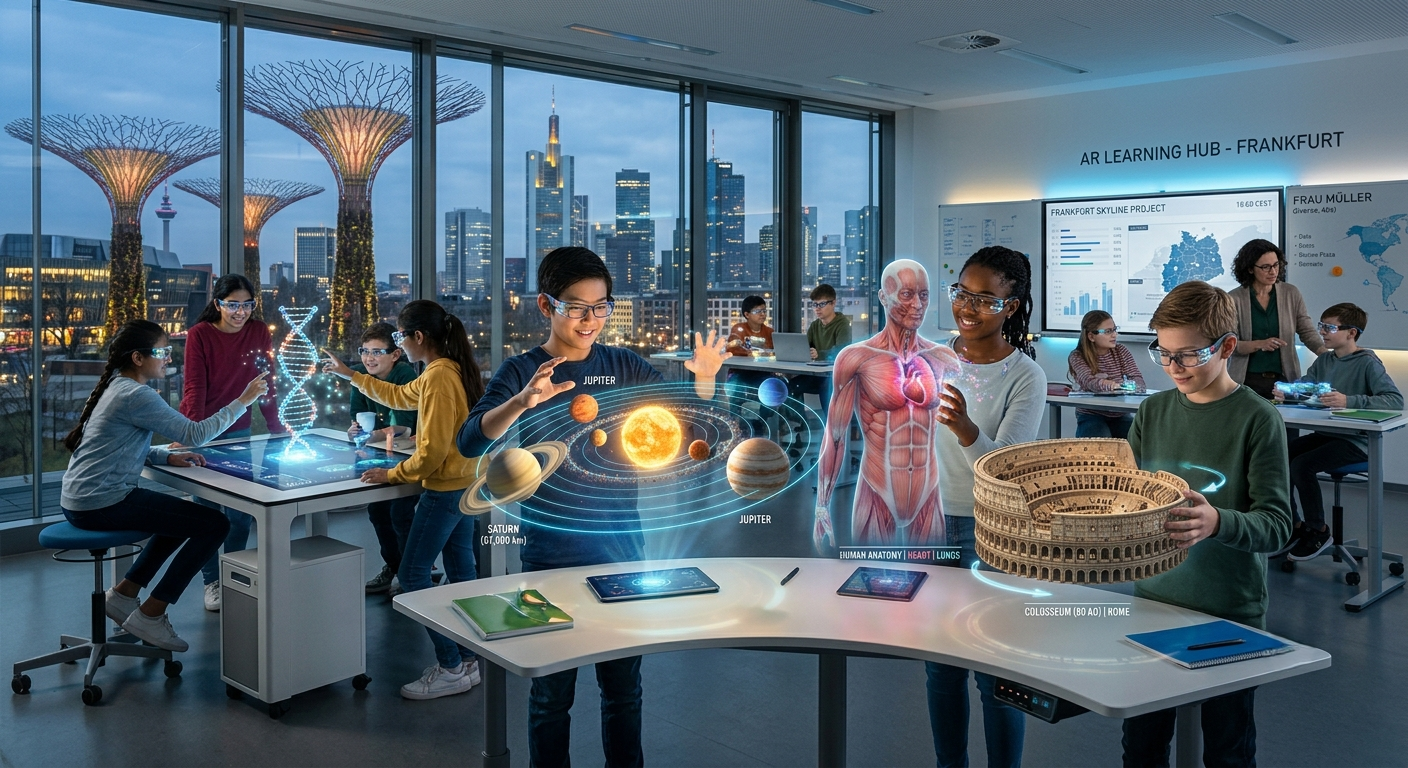
Augmented Reality is changing the way students learn by bringing digital content into the real world. Unlike virtual reality, which creates a completely digital environment, augmented reality overlays interactive 3D objects, animations, and information onto a user’s real surroundings. This creates engaging learning experiences that are easier to understand and remember.
In 2026, schools, universities, and training centers are adopting augmented reality to improve student engagement, simplify complex subjects, and encourage hands-on learning. Teachers can now explain difficult concepts through interactive models instead of relying only on textbooks or presentations.
As educational technology continues evolving, Augmented Reality is becoming one of the most exciting innovations in modern classrooms.
Why Augmented Reality Matters
Traditional learning methods often struggle to keep students engaged, especially when explaining abstract or scientific concepts.
Augmented reality helps by making lessons:
- interactive
- visual
- practical
- engaging
- easier to understand
Instead of simply reading about a topic, students can interact with digital objects, explore detailed models, and experience lessons from entirely new perspectives.
This improves both motivation and knowledge retention.
1. Science Lessons Become Interactive
Science is one of the subjects benefiting the most from Augmented Reality.
Students can examine detailed 3D models of:
- the human heart
- DNA molecules
- planets
- volcanoes
- the solar system
Instead of imagining how these structures look, learners can rotate, zoom, and explore them from every angle.
Complex scientific ideas become easier to understand because students are actively participating rather than simply reading or listening.
This interactive approach also encourages curiosity and classroom discussions.
🔗 Official Resource: Google for Education
2. History Comes to Life
History lessons often rely on photographs and written descriptions.
With augmented reality, students can experience historical events in a completely different way.
Imagine exploring:
- Ancient Rome
- the Egyptian pyramids
- medieval castles
- famous battlefields
- historical landmarks
AR applications can recreate these environments directly inside the classroom, allowing students to observe architecture, artifacts, and historical locations in three dimensions.
This makes history more engaging and memorable than traditional learning methods.
3. Medical and Engineering Training Is Improving
Universities increasingly use Augmented Reality for professional education.
Medical students can study:
- human anatomy
- organs
- bones
- surgical procedures
without depending entirely on physical models.
Engineering students benefit by visualizing machines, engines, electrical systems, and construction projects before they are built.
These interactive simulations reduce costs while providing valuable practical experience.
➡ Read Also: How AI Healthcare Is Improving Modern Medicine
➡ Read Also: Virtual Reality in Healthcare Training
4. Remote Learning Becomes More Engaging
One challenge of online education is maintaining student attention.
Augmented reality helps solve this problem by turning remote lessons into interactive experiences.
Students can participate from home while viewing 3D educational content through tablets, smartphones, or AR headsets.
Instead of watching static presentations, they interact directly with digital learning materials, making online education feel much more immersive.
🔗 Official Resource: Microsoft Education
5. Collaborative Learning Is Becoming More Interactive
One of the biggest advantages of Augmented Reality is its ability to improve teamwork inside and outside the classroom. Instead of working only with textbooks or shared documents, students can interact with the same digital models in real time.
For example, a science class can examine a virtual human skeleton together, while engineering students can assemble a digital machine as a team. This encourages discussion, problem-solving, and collaboration.
Teachers also benefit because they can guide students through interactive exercises, answer questions instantly, and adapt lessons based on how quickly students understand new concepts.
Group learning becomes more engaging because everyone can participate actively rather than simply watching a presentation.
6. Language Learning Is Becoming More Practical
Learning a new language often requires students to memorize vocabulary and grammar rules. Augmented Reality makes this process far more engaging by connecting words directly to real-world objects.
Students can use smartphones or AR glasses to identify everyday items and instantly see:
- translations
- pronunciation guides
- example sentences
- grammar explanations
Interactive conversations can also be simulated through AR applications, allowing learners to practice speaking in realistic situations without leaving the classroom.
This practical approach helps students build confidence while improving both vocabulary retention and communication skills.
Educational institutions are increasingly exploring AR language tools because they make learning more natural and enjoyable.
7. Artificial Intelligence Is Making AR Even Smarter
The future of education will combine Augmented Reality with artificial intelligence to create highly personalized learning experiences.
AI can analyze how students perform during lessons and automatically adjust the difficulty level based on their progress.
Future AR systems may:
- recommend personalized exercises
- identify learning weaknesses
- provide instant feedback
- generate interactive quizzes
- create adaptive lesson plans
This combination of AI and AR could help teachers spend less time on repetitive administrative work while focusing more on supporting individual students.
As educational software becomes more intelligent, classrooms will become increasingly personalized for every learner.
Challenges of Augmented Reality in Education
Although the benefits are impressive, several challenges still limit widespread adoption.
High Equipment Costs
Many schools cannot yet afford AR headsets or advanced classroom technology.
Teacher Training
Educators need proper training before they can successfully integrate AR into daily lessons.
Technical Requirements
Reliable internet connections, compatible devices, and regular software updates are essential for a smooth learning experience.
Content Availability
Not every subject currently has high-quality AR educational content, meaning schools often need to combine traditional teaching methods with new technologies.
Despite these obstacles, costs are gradually decreasing as AR devices become more affordable and software developers create more educational applications.
What Comes Next
Experts expect Augmented Reality to become a standard classroom tool during the next decade.
Future developments may include:
- AI-powered tutors
- holographic classroom demonstrations
- fully interactive textbooks
- real-time language translation
- collaborative virtual laboratories
- smarter educational analytics
As technology continues advancing, students will learn through experiences rather than simply reading information from books.
Final Outlook
Augmented Reality is transforming education by making lessons more interactive, practical, and engaging. From science and medicine to engineering and language learning, AR helps students visualize complex concepts in ways that traditional teaching methods cannot.
While challenges such as equipment costs and teacher training still exist, rapid technological progress is making AR more accessible every year. Combined with artificial intelligence and cloud-based learning platforms, augmented reality has the potential to reshape classrooms around the world.
The future of education is no longer limited to textbooks and whiteboards. It is becoming immersive, intelligent, and highly interactive—giving students new ways to explore, understand, and remember the world around them.