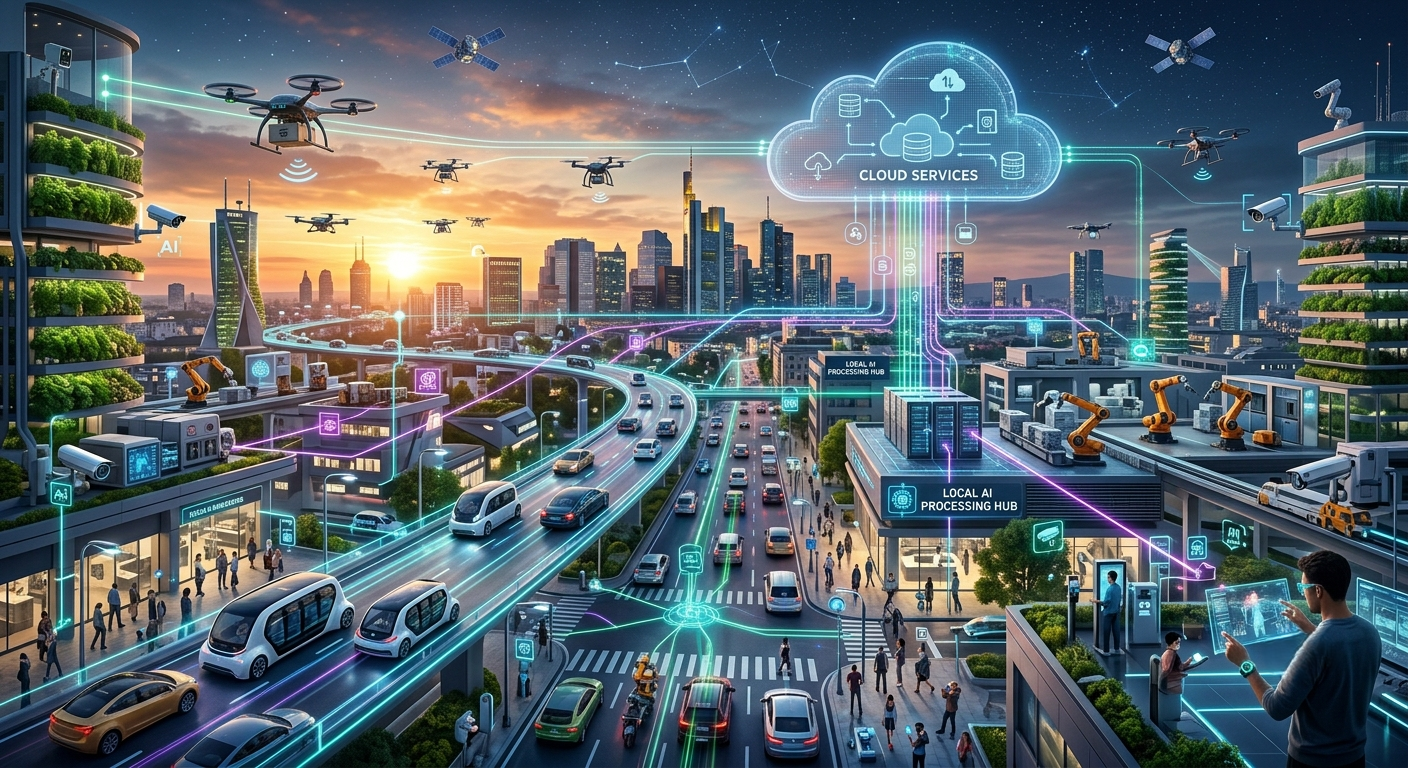
Edge AI: 8 Powerful Ways Intelligence Is Moving Closer to Devices
Artificial intelligence has become one of the driving forces behind modern technology. From virtual assistants and recommendation systems to autonomous vehicles and industrial automation, AI is changing how people live and work. Traditionally, most AI applications relied heavily on cloud computing, where data is transmitted to remote data centers for processing before results are sent back to users.
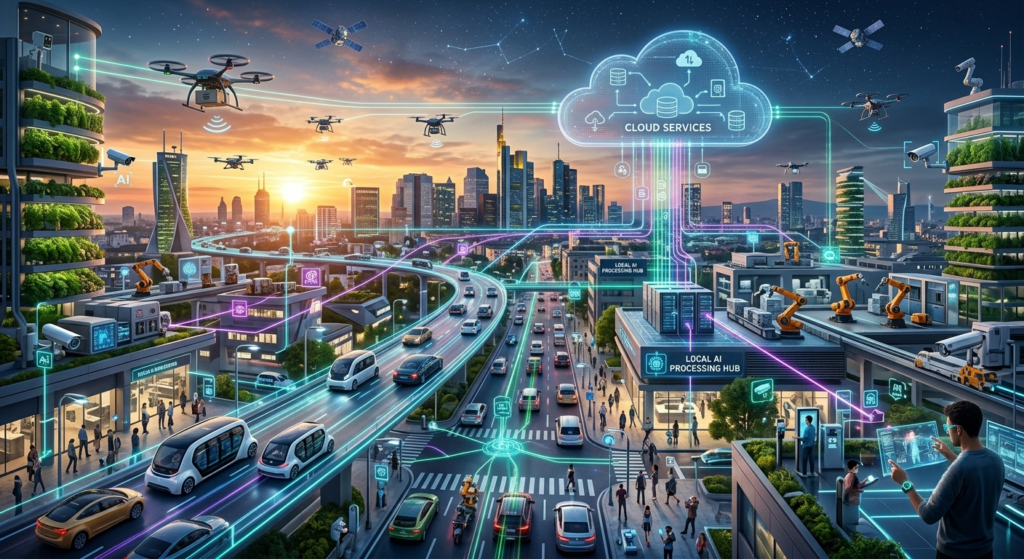
While cloud AI offers tremendous computing power, it also introduces challenges such as network latency, bandwidth limitations, privacy concerns, and internet dependency. These limitations have led to the rapid development of Edge AI, an approach that processes artificial intelligence directly on local devices instead of relying entirely on distant cloud servers.
By bringing AI closer to where data is generated, Edge AI enables faster decisions, improved security, lower operating costs, and greater reliability. As processors become more powerful and energy-efficient, Edge AI is expected to play an increasingly important role in smartphones, autonomous vehicles, smart factories, healthcare, and countless other industries.
In this article, we’ll explore eight powerful ways Edge AI is transforming the future of intelligent devices.
What Is Edge AI?
Edge AI combines artificial intelligence with edge computing.
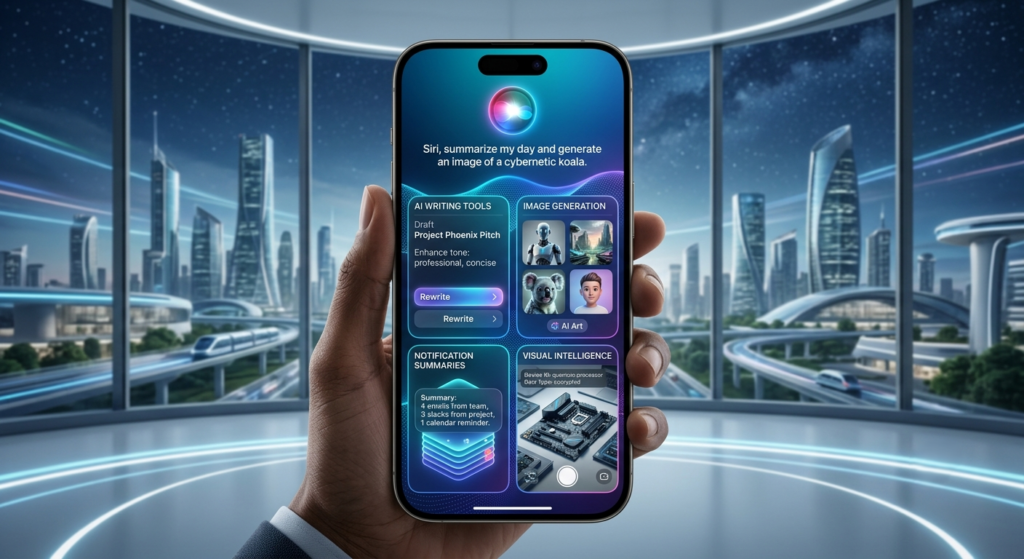
Instead of sending every piece of information to the cloud, AI models run directly on local hardware such as:
- smartphones
- autonomous vehicles
- security cameras
- industrial robots
- medical equipment
- IoT sensors
Processing information locally allows devices to make decisions almost instantly while reducing dependence on internet connectivity.
1. Real-Time Decision Making
One of the biggest advantages of Edge AI is speed.
Since information is processed directly on the device, there is no need to wait for data to travel to remote cloud servers and back.
This enables real-time decision-making for applications such as:
- autonomous driving
- industrial automation
- robotics
- drone navigation
- smart manufacturing
- emergency response systems
Milliseconds can make a critical difference, especially when human safety is involved.
2. Improved Privacy and Data Security
Many AI applications process sensitive information.
Examples include:
- facial recognition
- medical records
- financial transactions
- voice commands
- biometric authentication
- industrial data
With Edge AI, much of this information can remain on the local device rather than being transmitted across the internet.
Reducing data transmission lowers privacy risks and helps organizations comply with increasingly strict data protection regulations.
3. Reduced Network Latency
Cloud computing depends on stable internet connections.
In contrast, Edge AI allows devices to continue operating efficiently even when connectivity is limited or temporarily unavailable.
Benefits include:
- faster response times
- reduced communication delays
- improved reliability
- smoother user experiences
- lower bandwidth usage
- uninterrupted local processing
This makes Edge AI particularly valuable in remote locations and mission-critical environments.
4. Smarter Autonomous Vehicles
Modern autonomous vehicles generate enormous amounts of sensor data every second.
Cameras, radar, ultrasonic sensors, and LiDAR systems continuously analyze the surrounding environment.
Sending all of this information to the cloud would introduce unacceptable delays.
Instead, Edge AI allows vehicles to process data locally and immediately perform tasks such as:
- obstacle detection
- lane recognition
- pedestrian identification
- adaptive cruise control
- traffic sign recognition
- collision avoidance
Real-time processing significantly improves driving safety and system reliability.