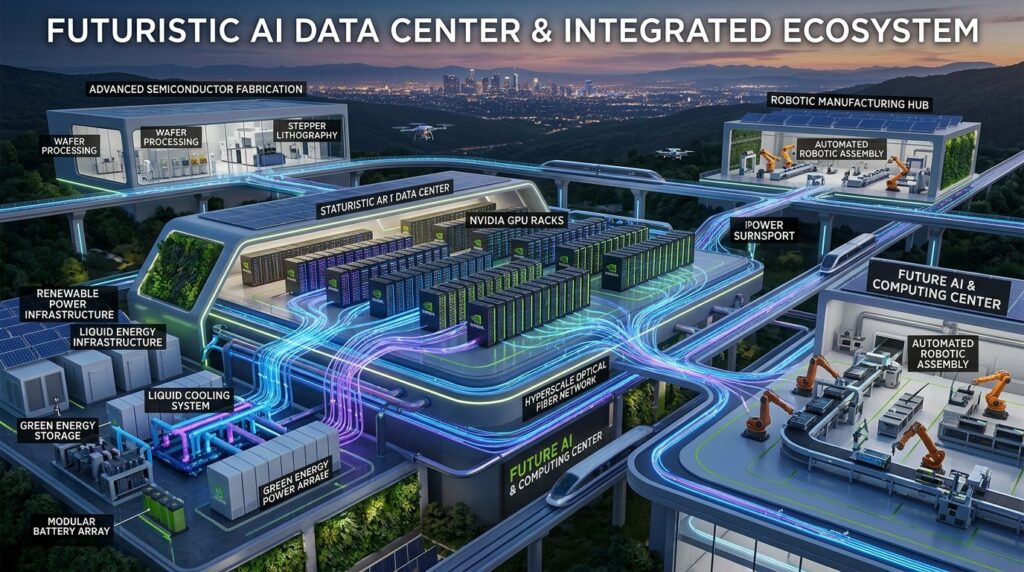
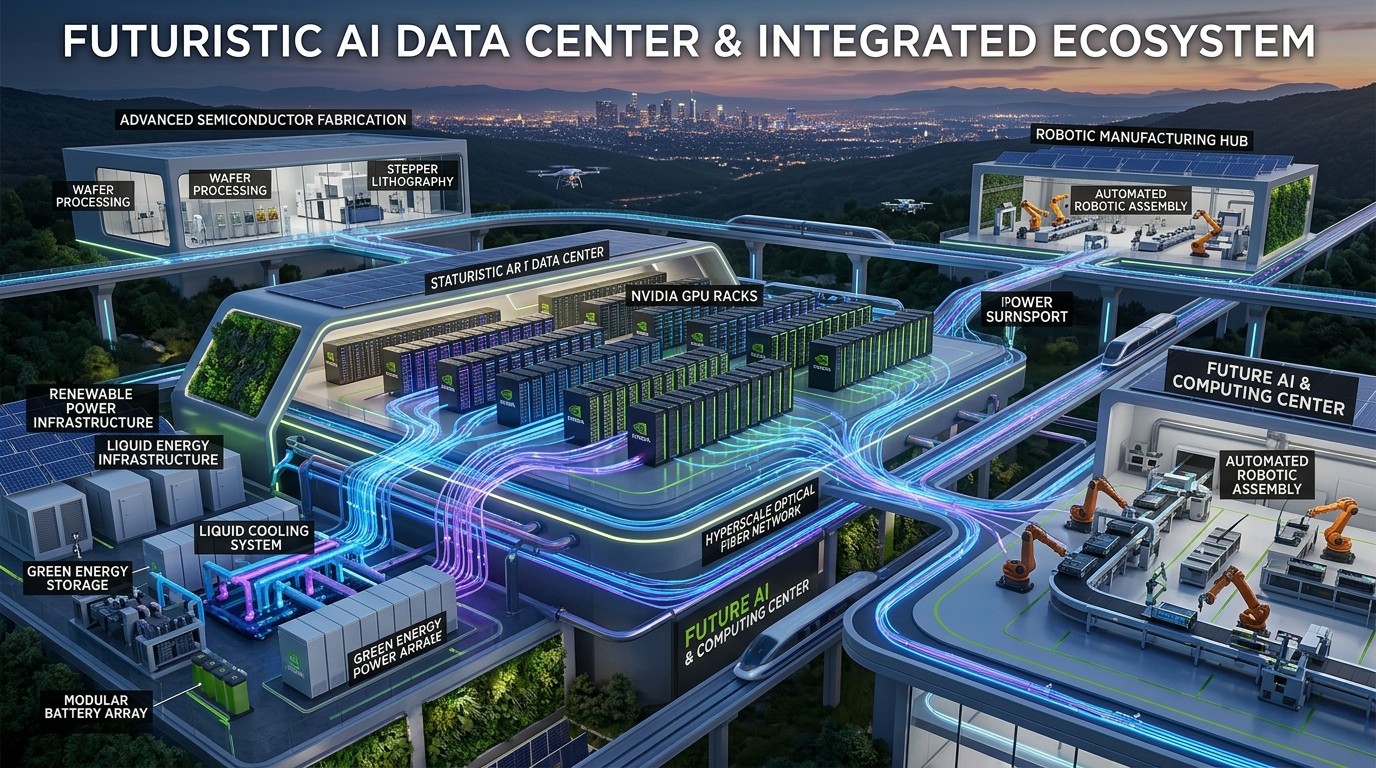
AI infrastructure technologies beyond NVIDIA powering the future of artificial intelligence
Artificial intelligence depends on far more than GPUs. Entire industries are building the infrastructure behind the AI revolution.

Beyond NVIDIA: 8 Hidden Technologies That Could Power the Next AI Boom

When most people think about artificial intelligence, one company immediately comes to mind—NVIDIA. Its graphics processors have become the foundation of modern AI systems, powering everything from ChatGPT to autonomous vehicles and scientific research. As demand for AI continues to grow, NVIDIA has become one of the world’s most valuable technology companies.

However, focusing only on NVIDIA tells only part of the story.

Behind every AI model lies an enormous ecosystem of manufacturers, engineers, networking companies, power specialists, and semiconductor suppliers. AI cannot exist without advanced chip factories, high-speed optical connections, reliable electricity, sophisticated cooling systems, and intelligent manufacturing processes.

Many of these technologies receive far less attention than AI chips themselves, yet they may become equally important over the next decade. As artificial intelligence expands into healthcare, robotics, finance, transportation, manufacturing, and education, the supporting infrastructure behind AI is expected to grow alongside it.

Instead of asking which AI company will win, a better question may be:

Which technologies make the AI revolution possible?


Why Looking Beyond NVIDIA Matters

Artificial intelligence is often described as a software revolution, but in reality it is also one of the largest infrastructure projects ever undertaken.

Modern AI requires:

  • advanced semiconductor manufacturing
  • enormous data centers
  • high-speed networking
  • reliable electrical grids
  • liquid cooling systems
  • intelligent automation

Every new AI data center requires thousands of specialized components before a single AI model can begin training. This growing demand creates opportunities for companies operating throughout the AI supply chain rather than only those designing AI chips. Recent announcements from NVIDIA and its ecosystem partners illustrate how AI infrastructure increasingly spans semiconductor manufacturing, factory automation, power systems, and cooling technologies.


1. Semiconductor Manufacturing Is Becoming More Important Than Ever

Designing an advanced AI chip is only the beginning.

Manufacturing those chips requires some of the world’s most sophisticated factories, capable of producing components measured in nanometers.

One of the industry’s most important companies is TSMC, which manufactures advanced processors for many leading technology companies.

Modern semiconductor production relies on:

  • advanced lithography
  • automated inspection
  • precision manufacturing
  • AI-assisted quality control
  • highly specialized production facilities

As artificial intelligence becomes more powerful, manufacturing these increasingly complex chips will become one of the industry’s greatest technical challenges.

🔗 Official Resource: TSMC


2. Advanced Chipmaking Equipment Powers Every AI Processor

Even semiconductor manufacturers depend on another layer of technology.

Companies such as ASML develop the highly advanced lithography systems required to produce the world’s most powerful processors.

Without these machines:

  • advanced AI chips could not be manufactured
  • transistor sizes could not continue shrinking
  • chip performance would improve much more slowly

ASML is also investing in next-generation packaging technologies designed for increasingly complex AI processors, reflecting how semiconductor manufacturing continues evolving beyond traditional lithography.

➡ Read Also: Edge Computing: 7 Powerful Trends Transforming Real-Time Technology

➡ Read Also: Quantum Internet: The Next Revolution in Secure Communication


3. AI Data Centers Need Far More Than Powerful Chips

Training modern AI models requires enormous computing facilities containing thousands of specialized processors working together.

These AI factories also require:

  • uninterrupted electrical power
  • backup energy systems
  • advanced cooling
  • intelligent monitoring
  • network optimization

Companies like Vertiv and Eaton focus on these critical systems. Both are working with NVIDIA’s AI factory ecosystem to provide power, cooling, and infrastructure for increasingly demanding AI deployments.

As AI computing continues expanding worldwide, the infrastructure supporting these facilities may become just as important as the processors inside them.


4. Optical Networking Is Becoming the Next Bottleneck

Modern AI clusters contain thousands of processors that must exchange enormous amounts of information every second.

Traditional electrical connections are no longer sufficient for many next-generation AI systems.

Instead, companies are increasingly investing in:

  • silicon photonics
  • optical transceivers
  • high-speed fiber communication
  • laser technologies
  • optical switching

These technologies allow AI systems to communicate at extraordinary speeds while reducing latency and improving overall efficiency.

Several technology companies are investing heavily in optical networking because future AI factories will depend on moving data almost as efficiently as they process it. Recent partnerships involving NVIDIA and optical suppliers highlight this trend.

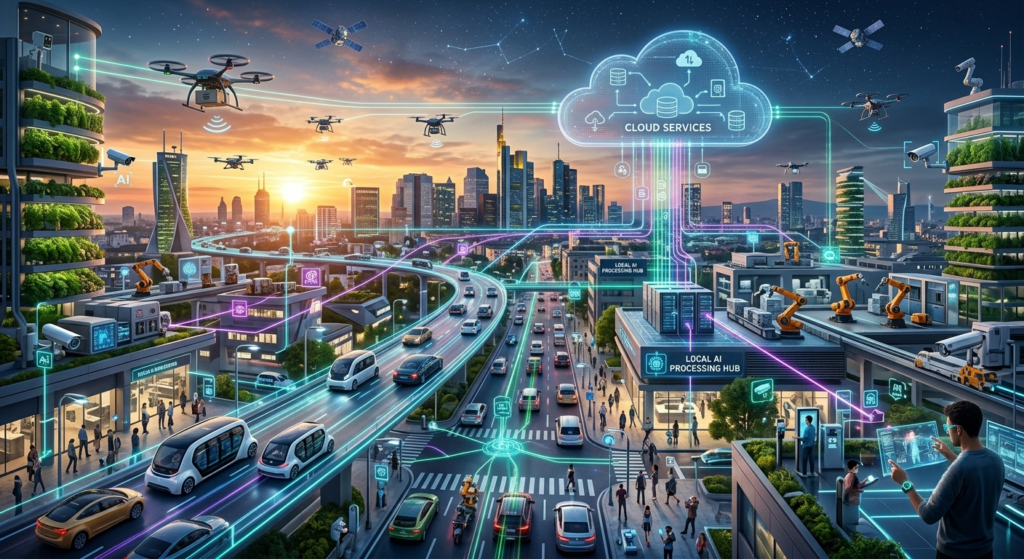
5. Modern Power Grids Are Becoming Essential

Artificial intelligence is dramatically increasing electricity demand around the world. Every new AI data center requires reliable, uninterrupted power to keep thousands of processors operating around the clock.

As AI infrastructure expands, investment in modern electrical systems is accelerating.

Important areas include:

  • smart power distribution
  • backup power systems
  • energy monitoring
  • grid modernization
  • battery storage
  • renewable energy integration

Companies such as Eaton are developing technologies that improve power efficiency while helping data centers operate more reliably.

Without stronger electrical infrastructure, future AI growth could face serious limitations as electricity demand continues increasing.

🔗 Official Resource: Eaton


6. Industrial Automation Is Accelerating Production

Building millions of AI processors and electronic components requires highly automated factories.

Modern manufacturing increasingly depends on:

  • industrial robots
  • AI-powered quality inspection
  • predictive maintenance
  • digital twins
  • automated logistics

Companies specializing in factory automation help semiconductor manufacturers improve production speed while maintaining extremely high quality standards.

Automation not only increases efficiency but also reduces production errors, helping manufacturers meet the growing demand for advanced technology products.

As AI continues expanding across industries, intelligent manufacturing systems are expected to become even more important.


7. Quantum Computing Could Unlock the Next AI Revolution

While today’s AI systems rely on traditional processors, researchers are already exploring how quantum computing could solve problems that are impossible for conventional computers.

Potential future applications include:

  • drug discovery
  • financial modeling
  • advanced materials research
  • logistics optimization
  • climate simulations

Although commercial quantum computing remains in its early stages, companies like IBM, Google, and several research organizations continue investing heavily in the technology.

If major breakthroughs occur during the next decade, quantum computing could eventually complement artificial intelligence by solving highly complex calculations much faster than classical systems.

Because the technology is still developing, investors and technology enthusiasts should view quantum computing as a long-term opportunity rather than an immediate replacement for existing AI infrastructure.

🔗 Official Resource: IBM Quantum


8. AI Infrastructure May Create the Biggest Long-Term Opportunities

When investors discuss artificial intelligence, most conversations focus on software companies or AI chips.

However, every AI model also depends on a much larger ecosystem that includes:

  • semiconductor manufacturing
  • chipmaking equipment
  • optical networking
  • cooling systems
  • electrical infrastructure
  • industrial automation

As AI adoption continues growing, demand for these supporting technologies is expected to increase alongside it.

Rather than relying on a single company, the future of artificial intelligence will likely be built by hundreds of specialized businesses working together across the global technology supply chain.

Understanding this broader ecosystem provides a more complete picture of where innovation and potentially future growth—may emerge.


Challenges Investors Should Consider

Although artificial intelligence presents enormous opportunities, no technology investment is guaranteed to succeed.

Several important risks remain.

High Valuations

Many leading AI companies already trade at premium valuations, meaning future growth expectations are already reflected in their share prices.

Geopolitical Tensions

The semiconductor industry depends on global supply chains that can be affected by international trade restrictions and geopolitical uncertainty.

Rapid Technological Change

Innovation moves quickly. Companies leading the market today may face strong competition from new technologies or changing customer demands.

Regulation

Governments around the world continue developing regulations covering artificial intelligence, advanced semiconductors, cybersecurity, and data privacy.

Investors should consider both the opportunities and the risks before making financial decisions.


What Comes Next

Artificial intelligence is still in the early stages of a much larger technological transformation.

During the next decade, experts expect continued investment in:

  • AI infrastructure
  • advanced semiconductor manufacturing
  • photonics
  • next-generation networking
  • robotics
  • edge computing
  • quantum computing
  • intelligent automation

Rather than replacing existing industries, AI is expected to strengthen many of them by increasing productivity, improving decision-making, and enabling entirely new products and services.

The companies building this infrastructure may become some of the most influential technology businesses of the coming decade.


Final Outlook

Looking beyond NVIDIA provides a broader perspective on the technologies shaping artificial intelligence. The AI revolution extends far beyond a single company. Every breakthrough in machine learning depends on an ecosystem of semiconductor manufacturers, equipment suppliers, optical networking specialists, power infrastructure providers, and automation experts working behind the scenes.

Companies such as TSMC, ASML, Vertiv, Eaton, and others are helping build the foundation that allows modern AI systems to operate at an unprecedented scale. Their contributions may receive less public attention, but they remain essential to the continued growth of artificial intelligence.

For technology enthusiasts and long-term investors alike, looking beyond the most visible companies can provide a broader understanding of how the AI ecosystem is evolving. The next decade is unlikely to be defined by a single winner. Instead, it will be shaped by an entire network of innovators building the technologies that make the future of AI possible.

Disclaimer: This article is for informational and educational purposes only and should not be considered financial or investment advice. Always conduct your own research and consider consulting a qualified financial advisor before making investment decisions.