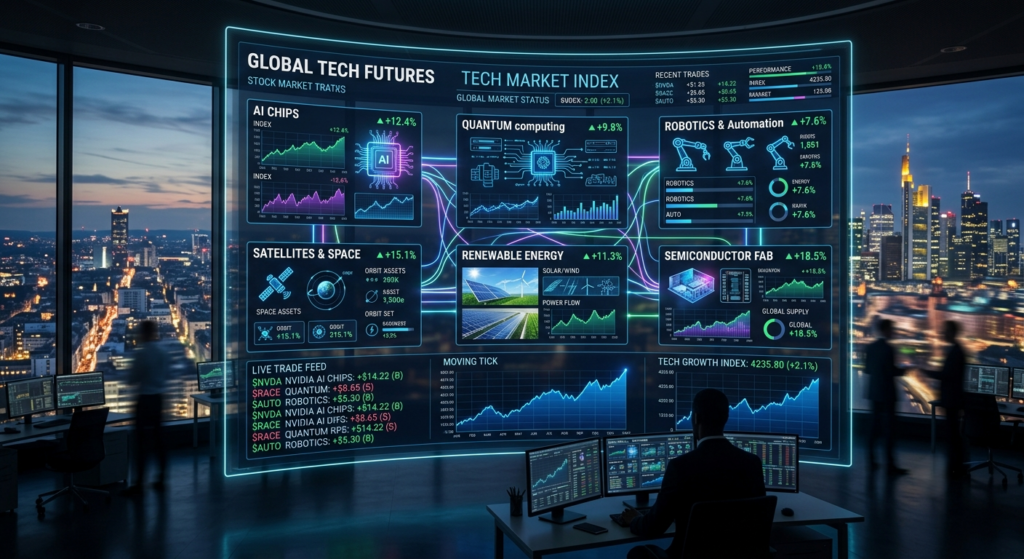
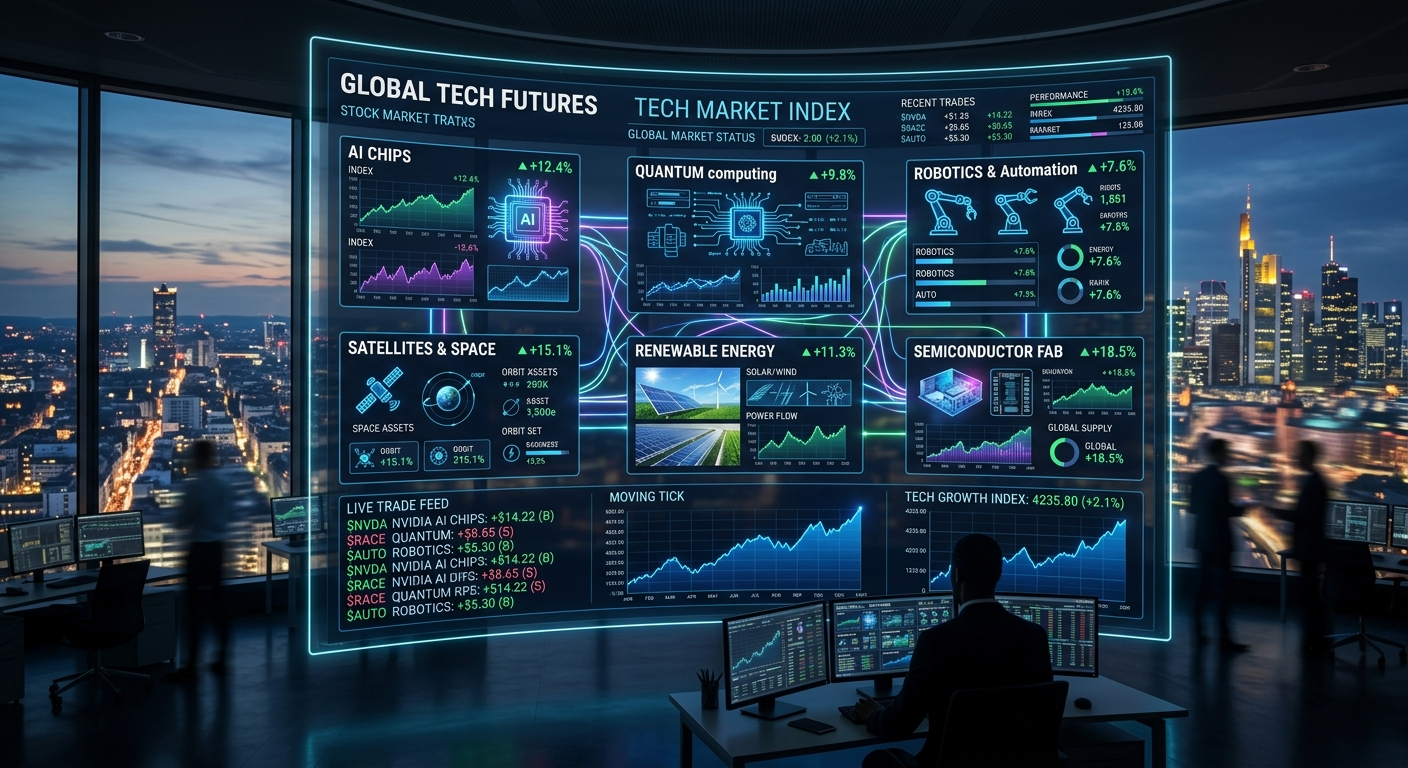
Future Tech Stocks across AI, semiconductors, robotics, and emerging technologies
The next decade could be shaped by industries building tomorrow’s technology infrastructure.

Future Tech Stocks: 8 High-Growth Industries That Could Shape the Next Decade

Technology has always been one of the strongest drivers of long-term economic growth. Companies that once seemed like small innovators have grown into global leaders by developing products and services that transformed the way people live and work. Artificial intelligence, cloud computing, smartphones, and electric vehicles are just a few examples of technologies that created entirely new industries.

Today, investors are asking a different question. Rather than searching for the next individual company, many are looking for the industries that could experience the strongest growth over the coming decade.

The future of technology is unlikely to be shaped by a single breakthrough. Instead, several rapidly evolving industries are expected to work together, creating new opportunities across artificial intelligence, semiconductors, cybersecurity, robotics, clean energy, healthcare, and digital infrastructure.

Understanding these broader trends can provide a clearer picture of where innovation may be heading over the next ten years.


Why Future Tech Stocks Matter

Technology companies continue investing billions of dollars into research, manufacturing, and digital infrastructure.

Major growth drivers include:

  • artificial intelligence
  • automation
  • digital transformation
  • clean energy
  • advanced computing
  • global connectivity

Rather than relying on one successful product, many future technology companies operate within industries that are expected to expand for years as businesses modernize their operations and consumers adopt new digital services.

Long-term investing often focuses on these structural trends instead of short-term market movements.


1. Artificial Intelligence Continues Expanding

Artificial intelligence remains one of the fastest-growing technology sectors in the world.

Its applications continue expanding into:

  • healthcare
  • finance
  • education
  • manufacturing
  • transportation
  • software development

Companies developing AI software, specialized processors, and supporting infrastructure may benefit as demand continues increasing.

Artificial intelligence is no longer limited to research laboratories. It is becoming an essential part of everyday business operations.

🔗 Official Resource: OpenAI


2. Semiconductors Power Every Modern Technology

Every major digital innovation depends on advanced semiconductor technology.

Processors are essential for:

  • AI systems
  • smartphones
  • autonomous vehicles
  • cloud computing
  • industrial automation

As computing requirements continue increasing, semiconductor manufacturers and equipment suppliers are expected to remain among the most important companies in the technology sector.

The growing demand for advanced chips also supports companies involved in manufacturing equipment, materials, and packaging technologies.


3. Cybersecurity Is Becoming Essential

As businesses become increasingly connected, cybersecurity continues growing in importance.

Organizations invest heavily in:

  • endpoint protection
  • cloud security
  • identity management
  • threat detection
  • zero trust architecture

Cybersecurity has shifted from an optional IT expense to a core business requirement.

This makes the sector one of the most resilient areas of long-term technology investment.

➡ Read Also: Cybersecurity Trends: The Race Between Attack and Defense

➡ Read Also: Beyond NVIDIA: 8 Hidden Technologies That Could Power the Next AI Boom


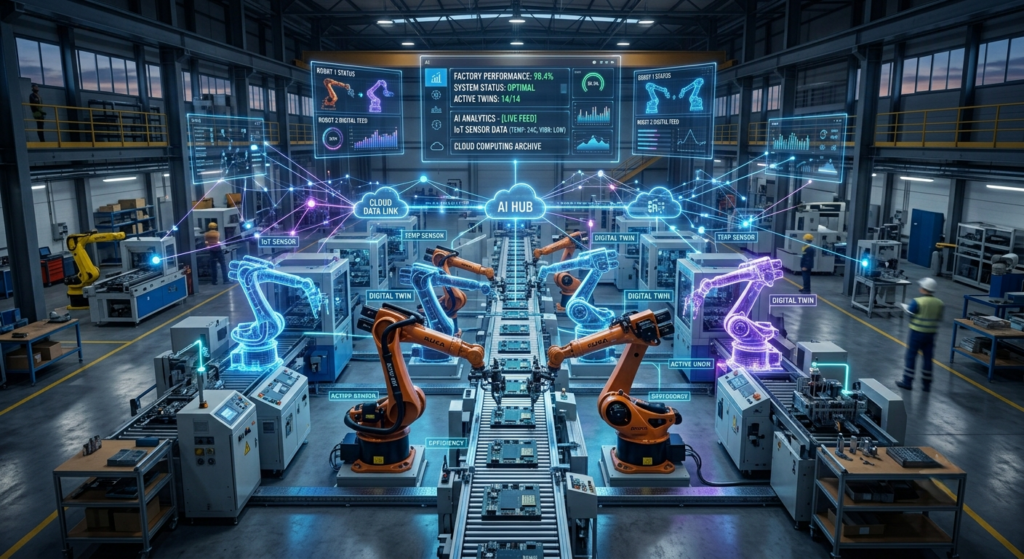
4. Robotics and Automation Continue Accelerating

Labor shortages, rising costs, and increasing demand for efficiency continue driving automation across multiple industries.

Modern robotics now supports:

  • manufacturing
  • logistics
  • healthcare
  • agriculture
  • warehouse operations

Artificial intelligence is making robots smarter, more adaptable, and capable of performing increasingly complex tasks.

Businesses investing in automation are expected to continue expanding as productivity becomes a major competitive advantage.

🔗 Official Resource: International Federation of Robotics
5. Clean Energy and Battery Technology Continue Advancing

The transition toward cleaner energy is creating opportunities far beyond electric vehicles. Governments and businesses are investing heavily in renewable energy generation, battery storage, and modern electrical infrastructure to support growing electricity demand.

Important areas include:

  • grid-scale battery storage
  • solid-state batteries
  • smart electrical grids
  • renewable energy integration
  • fast-charging infrastructure
  • energy management software

As artificial intelligence, electric vehicles, and digital infrastructure continue expanding, reliable energy systems will become increasingly important.

Companies developing advanced battery technologies and energy management solutions may play a significant role in supporting this transition.

🔗 Official Resource: International Energy Agency


6. Quantum Computing Could Transform Complex Problem Solving

Quantum computing remains one of the most exciting long-term technologies under development.

Unlike traditional computers, quantum systems are designed to solve highly complex calculations that would take conventional computers an enormous amount of time.

Potential future applications include:

  • pharmaceutical research
  • financial modeling
  • advanced encryption
  • logistics optimization
  • climate simulations
  • materials science

Although commercial adoption is still developing, governments and major technology companies continue investing billions of dollars into quantum research.

The industry remains high risk, but it could eventually reshape multiple sectors if technical challenges are overcome.


7. Digital Infrastructure Supports Every Innovation

Many emerging technologies depend on reliable digital infrastructure operating behind the scenes.

Modern infrastructure includes:

  • AI data centers
  • optical fiber networks
  • edge computing
  • satellite communications
  • cloud platforms
  • advanced semiconductor manufacturing

Without these systems, many of today’s digital services would not function efficiently.

Rather than focusing only on consumer products, investors increasingly recognize the importance of companies building the infrastructure that powers the digital economy.

This hidden technology layer may continue expanding as artificial intelligence becomes more widely adopted.


8. Biotechnology Is Entering a New Era

Healthcare innovation is accelerating through advances in biotechnology, artificial intelligence, and precision medicine.

Researchers continue developing new treatments using technologies such as:

  • gene editing
  • personalized medicine
  • AI-assisted drug discovery
  • regenerative medicine
  • advanced diagnostics

As populations age and healthcare systems modernize, biotechnology may become one of the most influential industries of the coming decades.

While research timelines remain long, scientific breakthroughs have the potential to create entirely new markets and improve patient outcomes worldwide.

🔗 Official Resource: Nature


Risks Every Investor Should Remember

Even industries with strong long-term potential involve uncertainty.

Some of the most important risks include:

High Valuations

Many technology companies already trade at premium prices because investors expect significant future growth.

Rapid Competition

Technology evolves quickly, and today’s market leaders may face new competitors or disruptive innovations.

Government Regulation

Artificial intelligence, cybersecurity, semiconductors, and biotechnology continue attracting increased regulatory attention around the world.

Economic Conditions

Interest rates, inflation, and global economic slowdowns can affect investment in technology and influence company valuations.

Understanding these risks is just as important as identifying future opportunities.


What Comes Next

The next decade is likely to be shaped by multiple industries working together rather than a single technological breakthrough.

Artificial intelligence will continue driving demand for:

  • advanced semiconductors
  • robotics
  • cybersecurity
  • digital infrastructure
  • clean energy
  • biotechnology
  • quantum computing
  • automation

Companies operating across these sectors may benefit as businesses continue investing in digital transformation and next-generation technologies.

Instead of focusing only on individual companies, understanding the industries behind innovation provides a broader perspective on long-term technological change.


Final Outlook

Future Tech Stocks represent far more than a collection of well-known technology companies. They reflect the industries building the infrastructure, software, and scientific breakthroughs that could shape the global economy over the next decade.

Artificial intelligence, semiconductor manufacturing, robotics, cybersecurity, clean energy, digital infrastructure, quantum computing, and biotechnology are all expected to influence how businesses operate and how people live in the years ahead. While no investment is guaranteed to succeed, these sectors are positioned at the center of many long-term innovation trends.

For investors and technology enthusiasts alike, following industries rather than short-term market headlines can provide a more balanced understanding of where future opportunities may emerge.

Disclaimer: This article is for educational and informational purposes only and does not constitute financial or investment advice. Always conduct your own research and consider consulting a qualified financial advisor before making investment decisions.